
How to Test Appliance Circuit Breakers Before Calling a Professional
Tired of circuit breakers that keep tripping every time you run your dishwasher or turn on the dryer? Before you shell out hundreds for a service call, there are several diagnostic tests you can safely perform yourself to identify whether the problem lies with your appliance, circuit, or breaker.
Picture this: you’re loading the dishwasher after dinner when suddenly the kitchen goes dark. You trudge down to the basement, flip the breaker back on, and start the dishwasher again – only to have it trip once more. Sound familiar? This scenario plays out in thousands of Maple Ridge homes every day, especially in our charming older neighborhoods where 1960s electrical systems are trying their best to handle 2024 appliance demands.
Here’s the thing that most homeowners don’t realize: not every breaker trip means you need to call an electrician immediately. Sometimes it’s a simple overload issue, sometimes it’s a failing appliance, and yes, sometimes it’s actually the breaker itself that’s gone rogue. Learning to distinguish between these scenarios can save you serious money and help you make smarter decisions about when professional help is actually necessary.
Key Outtakes:
- Circuit breakers that trip immediately when reset (with nothing plugged in) indicate wiring or breaker problems requiring professional attention
- Appliances that consistently trip breakers when operating alone suggest internal appliance faults rather than electrical system issues
- Multiple appliances tripping the same breaker simultaneously usually indicates circuit overload rather than equipment failure
- GFCI and AFCI breakers provide enhanced protection but can cause false trips with certain appliances like vacuum cleaners
- Proper multimeter testing can safely identify voltage presence and breaker functionality without removing components from the electrical panel
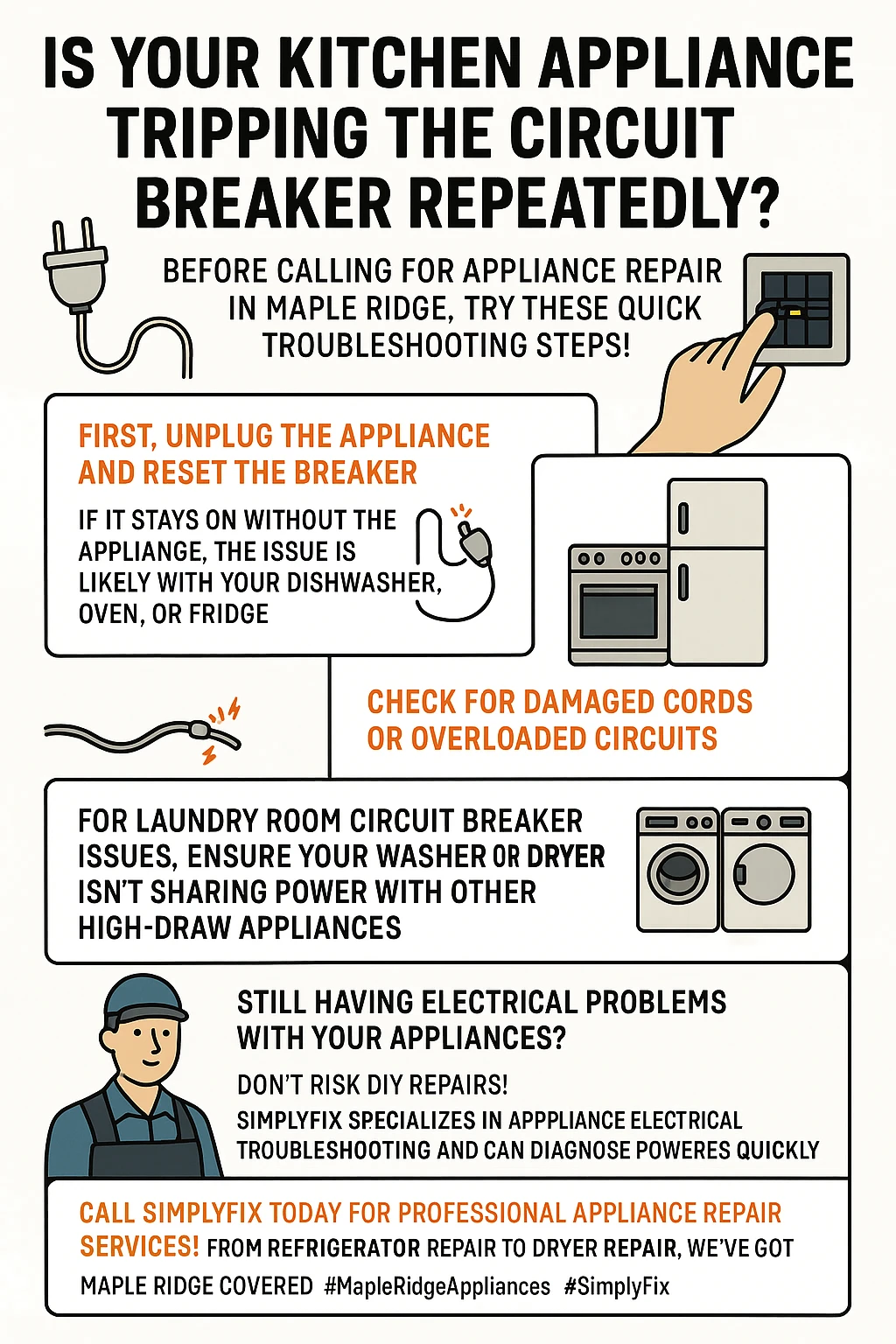
Understanding Your Circuit Breaker’s Job and Why It Keeps Interrupting Your Day
Think of your circuit breaker as the bouncer at an exclusive club – its entire job is to monitor how much electrical “traffic” flows through and kick out troublemakers before they can cause damage. Every breaker has a specific amperage rating (usually 15 or 20 amps for standard household circuits) that represents the maximum safe current flow it will allow before automatically shutting things down. When that limit gets exceeded, the breaker trips to prevent your wiring from overheating and potentially starting a fire.
The tricky part is figuring out why your electrical bouncer keeps getting triggered. Modern appliances are essentially computers with heating elements, pumps, and motors attached – they’re way more electrically sophisticated than the simple devices homes were wired for decades ago. Your smart dishwasher doesn’t just run a motor like the old models; it’s got circuit boards, sensors, electronic controls, and multiple heating elements that all need clean, stable power to function properly.Understanding how these systems interact becomes crucial when troubleshooting, because what looks like a simple appliance problem might actually be your home’s electrical system struggling to keep up with modern demands. The key is learning to systematically isolate the problem source before assuming you need expensive repairs or replacements.
The Detective Approach: Isolating Whether Your Appliance, Circuit, or Breaker Is the Culprit
Before you start throwing money at the problem, you need to become an electrical detective. The most reliable diagnostic technique involves what electricians call the “process of elimination method” – systematically removing variables until you identify the exact source of the problem. Start by unplugging everything from the affected circuit and observing whether the breaker stays stable with zero load. If it trips even with nothing connected, you’ve just discovered that the problem lies in your home’s wiring or the breaker itself, not any specific appliance. 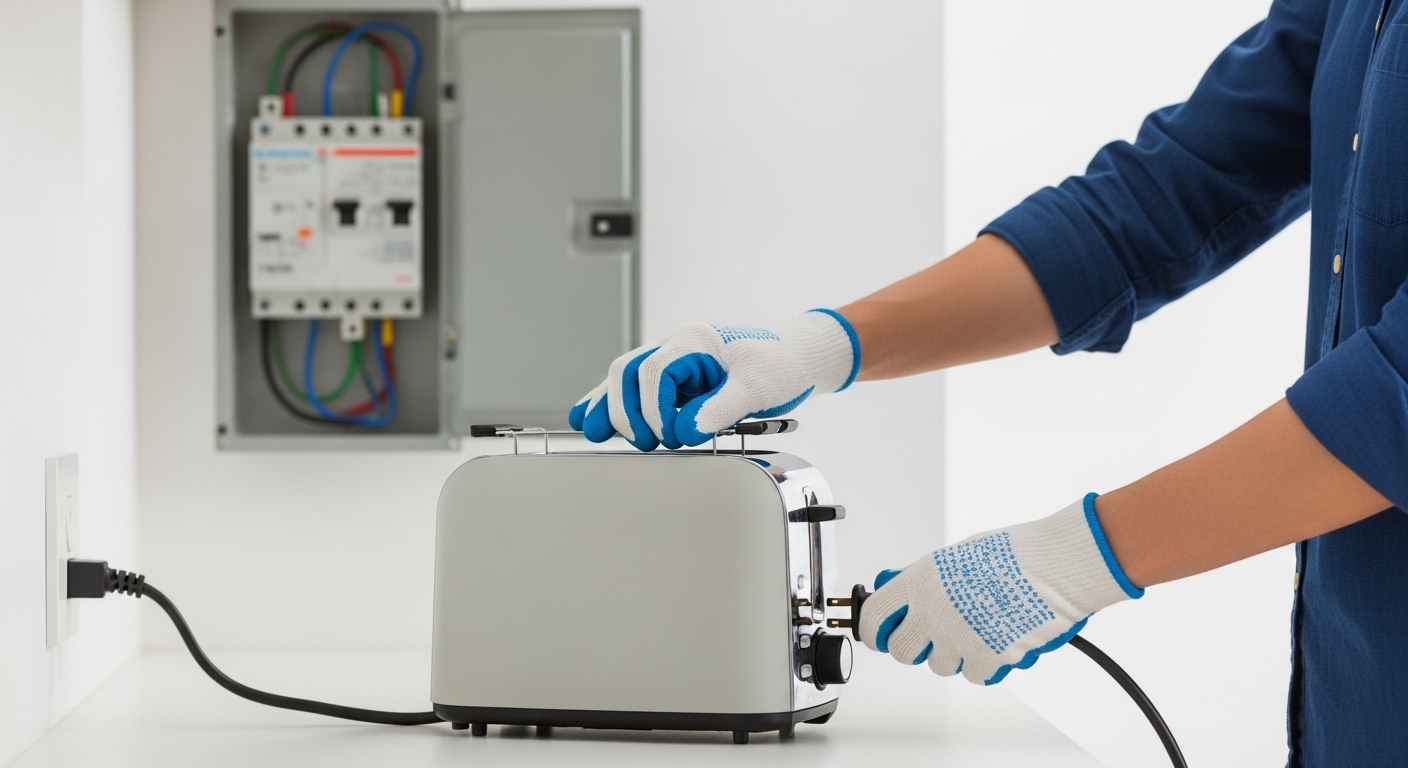 This initial test is surprisingly revealing because it immediately tells you whether you’re dealing with an appliance issue or an electrical system problem. If the breaker remains stable when nothing’s plugged in but trips the moment you connect devices, you’ve narrowed the problem down to either a specific appliance or combined electrical demand that exceeds the circuit’s capacity. This distinction is crucial because it determines whether you need appliance repair, load redistribution, or electrical system work.
The next step involves reconnecting appliances one at a time while carefully monitoring the breaker’s response. This methodical approach reveals whether a particular device consistently triggers the problem or whether the issue only occurs when multiple appliances operate simultaneously. For example, if your kitchen breaker trips only when the microwave, coffee maker, and toaster all run at once, you’re dealing with circuit overload rather than equipment failure. However, if plugging in just the dishwasher immediately trips the breaker every time, that appliance has developed an internal fault requiring attention.
Essential Testing Tools and How to Use Them Safely
Proper circuit breaker testing requires specific diagnostic equipment, but you don’t need to invest in expensive professional-grade tools to get useful information. A quality digital multimeter represents your most important diagnostic tool, allowing you to measure voltage, current, and resistance across different parts of your electrical system safely. When shopping for a multimeter, look for one specifically designed for household electrical work rather than cheap generic models that might provide inaccurate readings or lack proper safety features. 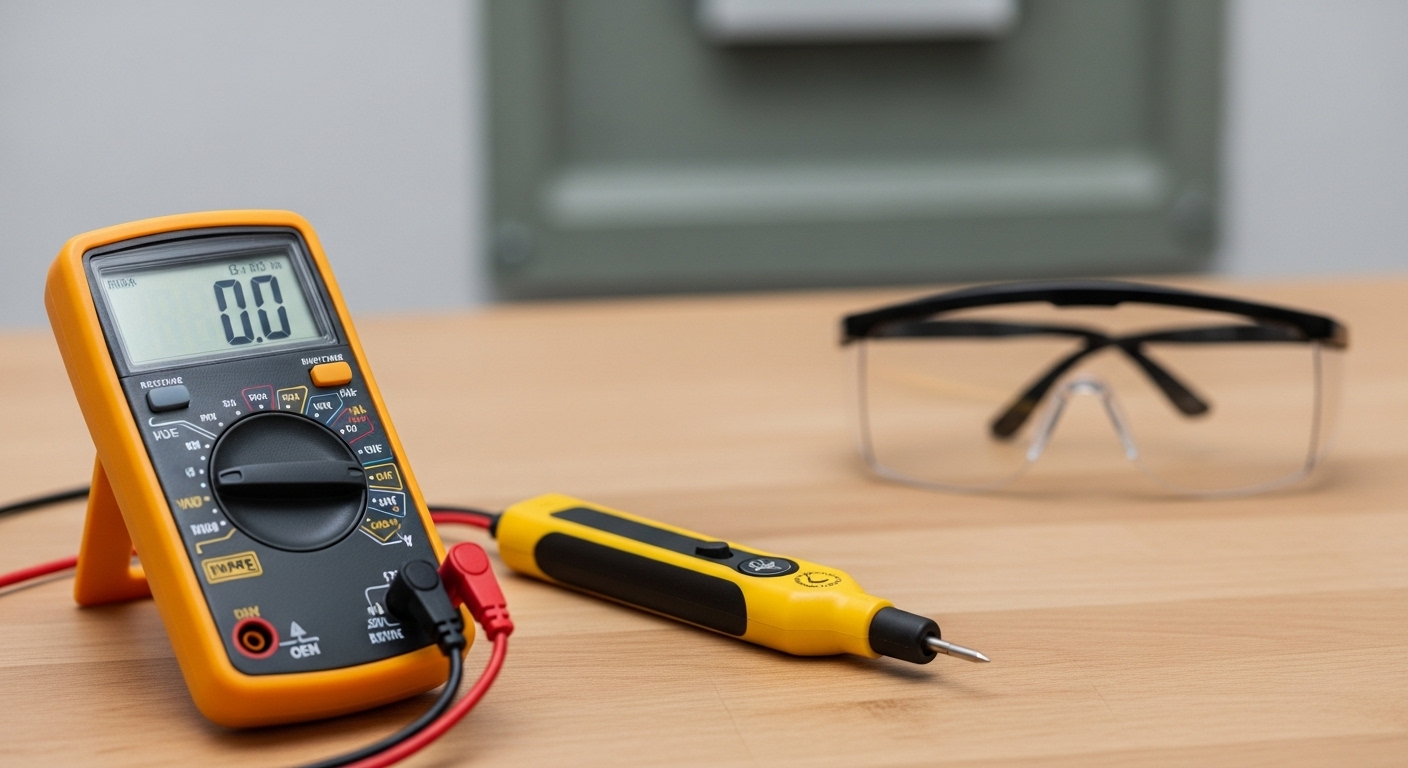 Learning proper multimeter operation starts with understanding the different measurement modes and safety procedures. To test whether a breaker is providing proper voltage, set your multimeter to the appropriate AC voltage scale (typically 120V for standard household circuits) and carefully place the red probe on the breaker terminal while connecting the black probe to the neutral bar. A properly functioning breaker should show approximately 120 volts when in the “on” position and zero volts when switched “off.”
Safety absolutely cannot be overstated when working around electrical panels – even experienced electricians treat main panels with extreme respect because they contain enough current to cause serious injury or death. Never attempt to remove breakers from the panel yourself, and always assume that all circuits are live unless you’ve personally verified otherwise with proper testing equipment. If you hear buzzing, see sparks, smell burning, or feel uncomfortable about any aspect of the testing process, stop immediately and contact a licensed electrician.
Non-contact voltage testers provide another valuable diagnostic tool that helps identify whether power reaches specific outlets or switches without requiring direct wire contact. These devices detect electrical fields and provide visual or audible indication when voltage is present, making them particularly useful for confirming that power has been properly shut off before beginning any repair work.
Recognizing When Your Circuit Breaker Has Gone Bad
Circuit breakers don’t last forever, and after years of faithful service protecting your home, they can develop internal problems that manifest as seemingly random trips or failure to provide adequate protection. A breaker that repeatedly trips under normal operating conditions without any obvious overload suggests that the internal trip mechanism has become oversensitive or unreliable. This condition proves particularly dangerous because the breaker may fail to provide protection during genuine electrical emergencies even while nuisance-tripping during normal operation.
Physical symptoms provide important clues about breaker condition. A breaker that refuses to stay in the “on” position or requires excessive force to switch between positions indicates mechanical failure within the breaker housing, often caused by internal component wear or damage. These mechanical issues warrant immediate professional evaluation because they suggest the breaker cannot reliably perform its protective function.
Audible warning signs demand immediate attention and professional investigation. Buzzing, humming, or crackling sounds emanating from the electrical panel, particularly when isolated to a specific breaker, indicate internal arcing or electrical activity that should not occur under normal circumstances. Similarly, if any part of your electrical panel feels warm or hot to the touch, especially around specific breakers, this suggests dangerous overheating that poses serious fire risk.
Visual evidence of problems includes discolored areas on the panel around breaker terminals, visible corrosion, or evidence of burning. These symptoms indicate electrical faults that have already caused damage and will likely worsen over time if not addressed by qualified professionals. Older electrical panels operating on 60 or 100-amp service may also indicate outdated systems with potentially unreliable breaker technology that warrants professional assessment for modern electrical demands.
Common Appliance Problems That Masquerade as Electrical Issues
Different types of appliances present distinct failure patterns that can help you determine whether the problem originates within the device or your home’s electrical system. Dryers represent particularly demanding appliances, typically requiring dedicated 30-amp, 240-volt circuits and drawing substantial current during normal operation. When dryers repeatedly trip circuit breakers, common culprits include worn terminal connections where the power cord attaches to internal wiring, faulty heating elements developing short circuits, or motor bearing deterioration forcing excessive current draw.
Refrigerators and freezers frequently cause breaker trips through compressor-related ground faults, particularly in older units where insulation has degraded over time. The cyclic nature of refrigerator operation means that problems often occur when the compressor starts up, drawing high initial current that can trigger sensitive breakers or reveal developing electrical faults. Testing involves disconnecting the refrigerator and observing whether the circuit stabilizes, which confirms an internal appliance problem rather than electrical system issues.
Kitchen appliances present unique challenges because they often share circuits despite drawing substantial power individually. Microwaves, dishwashers, and garbage disposals all incorporate heating elements, motors, and electronic controls that can develop ground faults or draw excessive current when components begin failing. The combination of multiple high-demand devices on shared circuits in older homes frequently results in overload conditions that appear to be appliance problems but actually indicate inadequate circuit capacity.
Washing machines and dryers in older Maple Ridge homes often suffer from circuit sharing that violates current electrical codes. Modern laundry appliances require dedicated circuits – typically 20 amps minimum for washing machines and 30 amps for electric dryers – but many existing installations combine these loads on circuits with insufficient capacity. This arrangement creates persistent breaker trips that won’t resolve until proper circuit separation is achieved through electrical system upgrades.
Circuit Overload: The Most Common Cause of Repeated Trips
Circuit overload represents the single most frequent cause of circuit breaker problems in residential settings, often resulting from gradual accumulation of additional devices over years of home use without consideration for electrical capacity limits. Each circuit in your home is designed with a maximum safe amperage rating, but practical safety margins mean circuits should operate at no more than 80 percent of their rated capacity during continuous use. This means a 20-amp circuit should safely support approximately 16 amps of combined device demand under normal operating conditions.
Modern kitchens exemplify the overload problem perfectly. A typical countertop setup might include a coffee maker drawing 10 amps, a toaster pulling 12 amps, and a blender requiring 8 amps – totaling 30 amps of demand on a 20-amp circuit when operated simultaneously. Add a microwave drawing another 15 amps, and you’ve created a situation where normal breakfast preparation exceeds safe circuit capacity by a substantial margin. Understanding these load calculations helps homeowners recognize why certain appliance combinations consistently cause problems. 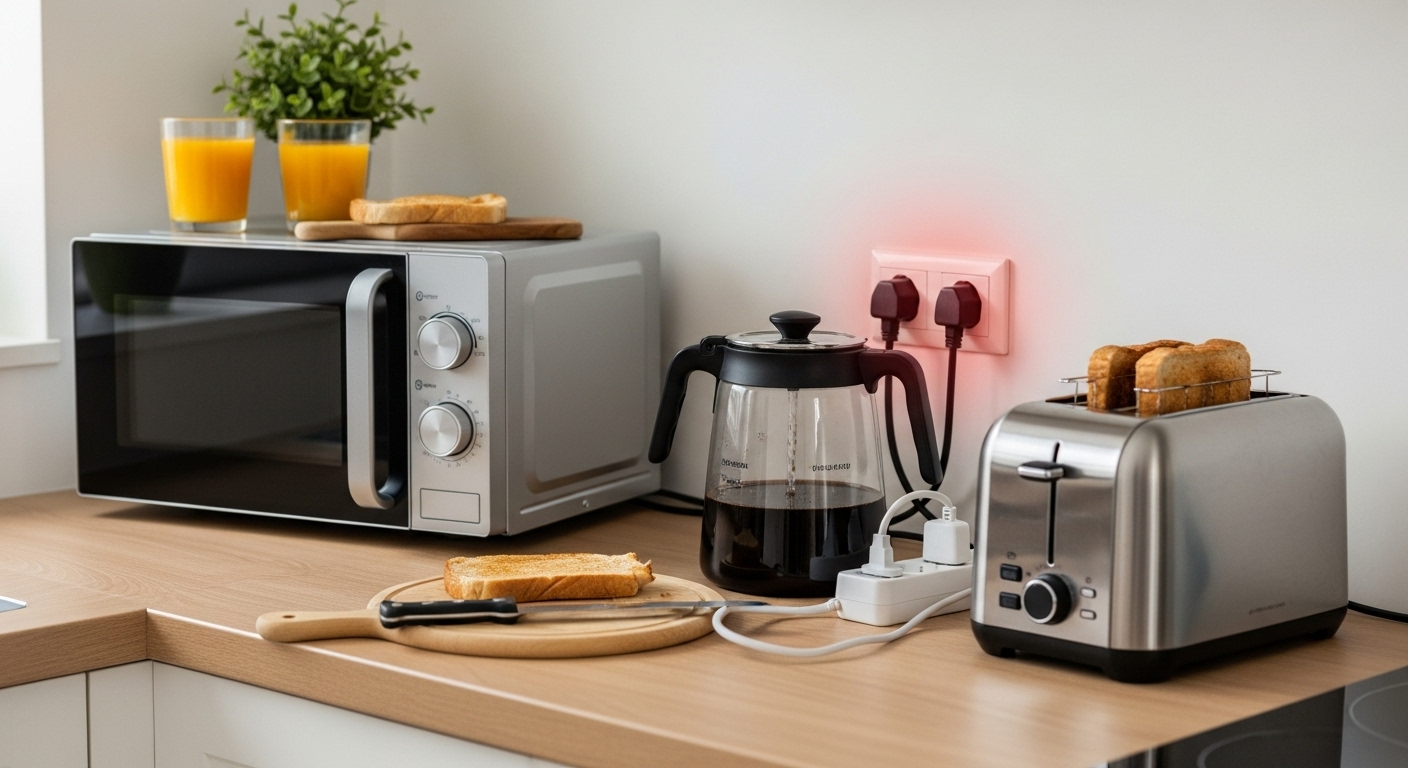 Many older Maple Ridge homes feature electrical systems designed when household electrical demands were dramatically lower than contemporary standards. Homes built in the 1960s and 1970s often incorporated 60-100 amp main service with circuit arrangements assuming minimal simultaneous appliance operation. These systems struggle with modern households where multiple high-demand devices operate continuously throughout the day, creating persistent overload conditions that manifest as frequent breaker trips.
Resolving overload issues requires either load redistribution (moving appliances to different circuits) or electrical system expansion through additional circuits or service upgrades. Temporary solutions include conscious load management – avoiding simultaneous operation of multiple high-power devices – while permanent solutions typically require professional electrical work to add circuit capacity or upgrade main service to handle contemporary electrical demands.
GFCI and AFCI Protection: When Safety Features Cause Confusion
Ground Fault Circuit Interrupters (GFCIs) and Arc Fault Circuit Interrupters (AFCIs) provide enhanced electrical protection beyond standard circuit breakers, but they can also cause seemingly mysterious trips that confuse homeowners unfamiliar with their operation. GFCI devices monitor current balance between hot and neutral conductors, tripping when they detect imbalances as small as 4-5 milliamps that might indicate current flowing through a person or other unintended path. This extreme sensitivity means GFCIs can trip due to normal appliance operation in some cases, particularly with older appliances or those containing motors.
AFCIs detect electrical arcing caused by damaged insulation or loose connections, initiating circuit trips before heat accumulation reaches dangerous levels. While this protection prevents electrical fires, AFCI devices sometimes respond to normal electrical noise produced by certain appliances, particularly vacuum cleaners with universal motors that create sparking as part of normal brush operation. Understanding these nuances helps homeowners distinguish between protective trips and equipment problems requiring attention.
The National Electrical Code mandates GFCI protection in kitchens, bathrooms, garages, and outdoor locations where water proximity increases electrocution risk, while AFCI protection is required in bedrooms, living rooms, and other habitable spaces. Modern homes should incorporate both protection types, while older homes may lack these safety features entirely. When troubleshooting in homes with GFCI or AFCI protection, homeowners must consider whether appliances are appropriate for the protected circuits and whether frequent trips indicate legitimate safety concerns or compatibility issues.
Testing GFCI and AFCI devices monthly using their built-in test buttons ensures continued proper operation, with immediate trip response confirming functional status. Devices that fail to trip during testing should be replaced immediately as they provide no protection despite appearing normal. Reset buttons restore power after successful testing, but persistent inability to reset after testing suggests device failure requiring professional replacement.
When to Stop Testing and Call the Professionals
Certain electrical symptoms indicate hazardous conditions requiring immediate professional intervention rather than continued troubleshooting attempts. Any situation involving electrical panel sounds (buzzing, crackling, or sizzling), visible sparks or smoke, burning smells from outlets or panels, or panels that feel warm or hot to the touch represents serious fire or electrocution risk that demands professional attention without delay. These warning signs suggest conditions that could catastrophically worsen if improperly handled by untrained individuals.
Professional consultation becomes essential when circuit breakers refuse to stay in the “on” position even with no devices connected, when multiple circuits experience simultaneous problems, or when breaker trips occur immediately upon resetting regardless of connected loads. These symptoms typically indicate wiring problems, panel issues, or dangerous fault conditions beyond the scope of homeowner troubleshooting capabilities.
Licensed electricians possess specialized training, diagnostic equipment, and insurance coverage that enable safe investigation of dangerous electrical conditions. They can perform tests that would be unsafe for homeowners, access electrical panel internals safely, and provide solutions that comply with current electrical codes and safety standards. Many electrical problems that appear simple on the surface actually require professional assessment to identify underlying causes and implement proper corrections.
The decision to engage professional services should also consider the age and condition of your home’s electrical system. Maple Ridge homes built before 1980 frequently feature electrical systems that fall short of contemporary safety standards and may harbor hidden problems that require professional evaluation. Investment in professional electrical inspection provides peace of mind and can identify potential problems before they escalate to emergency situations.
Frequently Asked Questions
How can I tell if my circuit breaker is bad or if it’s an appliance problem?
The most reliable test involves unplugging all appliances from the affected circuit and observing whether the breaker trips with zero load. If the breaker trips even when nothing is connected, the problem lies in the wiring or breaker itself rather than any appliance. If the breaker remains stable with no load but trips when appliances are reconnected, the issue involves either appliance faults or circuit overload depending on which devices trigger the problem.
What should I do if my circuit breaker keeps tripping even after I unplug everything?
A breaker that trips repeatedly with no connected load indicates a serious wiring problem or breaker failure requiring immediate professional attention. Do not continue resetting the breaker as this could worsen the problem or create fire risk. Contact a licensed electrician immediately to safely diagnose and repair the underlying fault condition.
Can I safely test a circuit breaker with a multimeter myself?
You can safely test circuit breaker voltage output using a multimeter without removing the breaker from the panel, but extreme caution is required when working around electrical panels. Set the meter to appropriate voltage scale, place probes on the breaker terminal and neutral bar, and verify the reading matches expected voltage (typically 120V for standard circuits). Never attempt to remove breakers from the panel or work inside panel enclosures without proper training and safety equipment.
Why does my kitchen circuit breaker trip only when I use multiple appliances at once?
Simultaneous operation of multiple high-power kitchen appliances often exceeds the circuit’s safe capacity, triggering protective breaker trips to prevent overheating. Modern appliances like microwaves, coffee makers, and toasters can individually draw 10-15 amps each, quickly overwhelming 15 or 20-amp kitchen circuits when operated together. This indicates circuit overload rather than equipment failure and requires either load management or electrical system upgrades to resolve permanently.
How often should I test my GFCI and AFCI breakers?
Test GFCI and AFCI devices monthly using their built-in test buttons to ensure continued proper operation. Press the test button to verify immediate trip response, then press the reset button to restore power. Devices that fail to trip during testing or refuse to reset afterward should be replaced immediately as they provide no electrical protection despite appearing to function normally.
What’s the difference between a short circuit and a ground fault?
A short circuit occurs when hot and neutral wires make unintended contact, creating a low-resistance path that allows dangerous current flow without passing through the intended load. A ground fault happens when a hot wire contacts a grounded surface like an appliance frame or ground wire, also creating an unintended current path. Both conditions cause immediate breaker trips and indicate potentially dangerous electrical faults requiring professional investigation rather than continued reset attempts.
Wrapping Up
Testing your appliance circuit breakers doesn’t have to be intimidating when you approach it systematically and prioritize safety above all else. By understanding the difference between circuit overload, appliance faults, and genuine electrical hazards, you can make informed decisions about when DIY troubleshooting makes sense and when professional intervention becomes necessary. Remember that the goal isn’t to become an electrical expert overnight, but rather to gather enough information to communicate effectively with repair professionals and avoid unnecessary service calls for simple problems you can resolve yourself.
When you do encounter electrical issues that seem beyond your comfort level – especially anything involving panel problems, persistent trips, or safety concerns – don’t hesitate to contact the experienced team at Simplyfix. Our licensed technicians understand the unique challenges facing Maple Ridge homeowners and can provide expert diagnosis and repair services that ensure your electrical system operates safely and reliably for years to come.
Recent Comments