

Why Appliance Warranties Fail When You Need Them Most
Ever filed an appliance warranty claim only to get hit with a denial letter that makes absolutely no sense? You’re not alone – thousands of Maple Ridge homeowners discover their warranty coverage vanishes exactly when they need it most, leaving them stuck with massive repair bills they thought were protected.
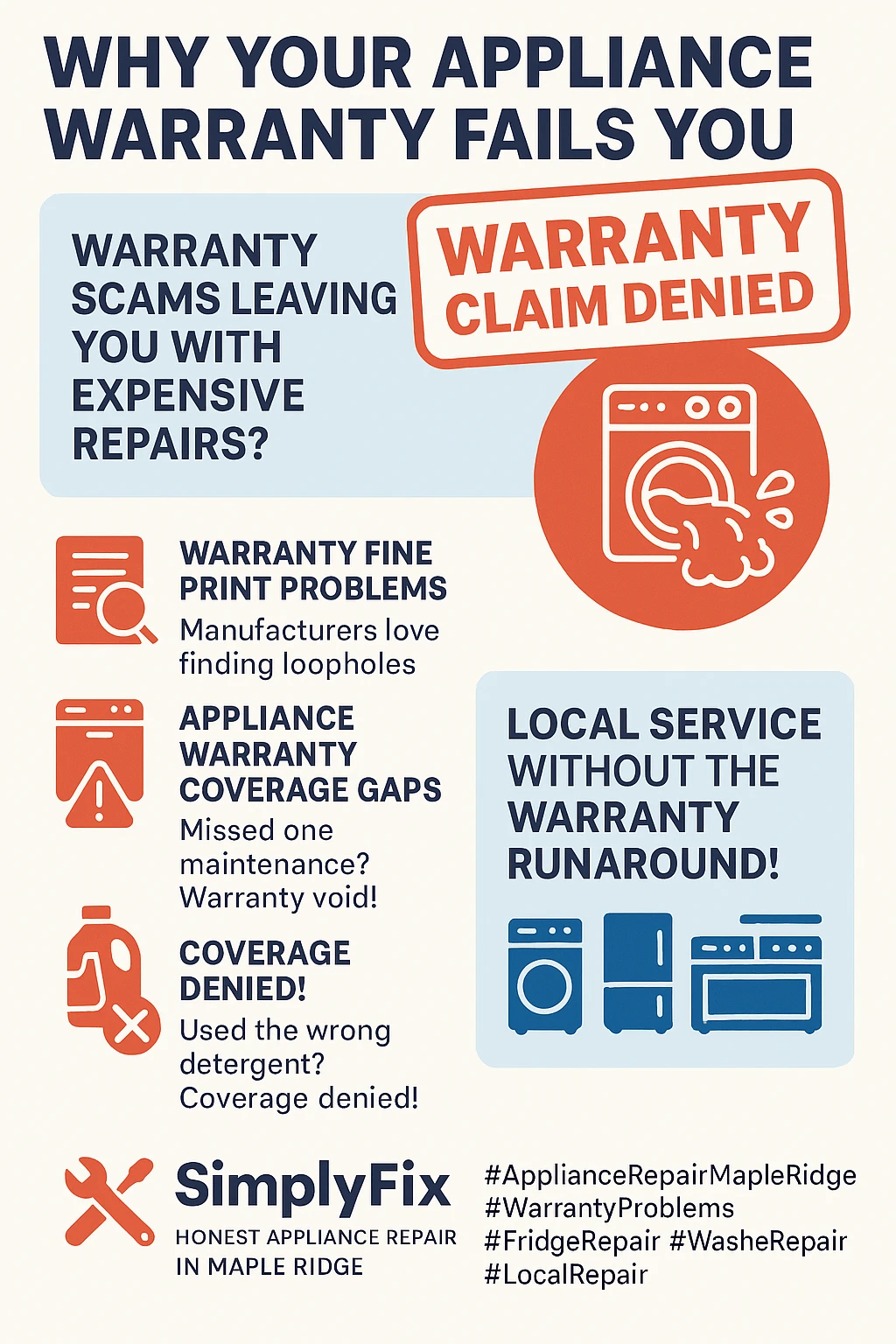
Picture this: your three-year-old dishwasher starts leaking all over your kitchen floor, and you’re already mentally patting yourself on the back for buying that extended warranty. You call the warranty company expecting a quick fix, only to be told your claim is denied because of “improper installation” or “normal wear and tear” – terms buried so deep in the fine print you’d need a magnifying glass to find them. Sound familiar?
After helping hundreds of homeowners in neighborhoods like Albion, Golden Ears, and Silver Valley navigate warranty nightmares, I’ve seen every excuse in the book for why warranty companies refuse to honor their commitments. The harsh reality is that these companies make money by collecting premiums, not by paying claims, and they’ve perfected the art of finding loopholes when you need coverage most.
Key Outtakes:
- Over 85% of warranty claim denials stem from vague contract language and exclusions that homeowners never fully understand until filing a claim
- Installation-related exclusions void most warranties even when professional installers make minor errors, leaving homeowners with zero recourse
- Warranty companies use “wear and tear” classifications to deny claims on appliances as young as 2-3 years old, despite normal usage patterns
- Small claims court, state insurance complaints, and BBB filing processes can force warranty companies to reconsider wrongful claim denials
- Preventive maintenance requirements buried in warranty terms create easy denial opportunities when homeowners can’t prove compliance
The Fine Print Trap That Destroys Coverage
Warranty contracts read like legal documents written by lawyers whose main job is protecting the company, not you. These agreements contain dozens of exclusions written in language so technical that even experienced homeowners miss critical limitations until they’re staring at a denial letter. The most devastating part is that many exclusions contradict the sales pitch you received when purchasing the warranty.
Take the “improper installation” exclusion that appears in virtually every warranty contract. This clause allows companies to deny claims if they determine your appliance wasn’t installed according to manufacturer specifications, even if you hired a licensed professional. I’ve seen claims denied because a dishwasher drain hose had a slight kink, or because a washing machine wasn’t perfectly level – issues that have zero connection to the actual failure that occurred.
The “normal wear and tear” exclusion creates another massive loophole that warranty companies exploit ruthlessly. They classify almost any component failure as expected deterioration, even on relatively new appliances. Your two-year-old dryer’s heating element fails? That’s normal wear and tear. Your three-year-old refrigerator’s compressor gives out? Also normal wear and tear, according to their interpretation.
Maintenance Requirements You Never Knew Existed
Buried deep in warranty contracts are maintenance requirements that most homeowners never discover until their claims get denied. These requirements often include annual professional inspections, specific cleaning schedules, and documentation that proves you’ve maintained your appliances according to manufacturer guidelines. Missing even one documented maintenance step can void your entire warranty coverage.
The documentation burden placed on homeowners is particularly unrealistic. Warranty companies expect you to maintain detailed records of every cleaning, every filter change, and every maintenance action performed on your appliances. When your dishwasher pump fails after 18 months, they’ll demand proof that you cleaned the filter monthly and used only approved detergents – documentation that virtually no homeowner maintains.
Professional maintenance requirements create another financial burden that warranty salespeople conveniently forget to mention. Many contracts require annual inspections by certified technicians, adding $100-$200 in yearly costs that effectively eliminate any savings the warranty might provide. These inspection requirements often get added through contract amendments that homeowners receive after purchase, buried in routine correspondence that looks like marketing materials.
Installation Errors That Void Everything
Even when you hire licensed professionals to install your appliances, minor installation variations can provide warranty companies with grounds for complete coverage denial. This creates a particularly frustrating situation where homeowners believe they’ve done everything correctly, only to discover that their professional installer made decisions that technically violate warranty requirements.
Electrical connections present a common area where installation issues arise. If your appliance installer uses electrical connections that meet local building codes but differ slightly from manufacturer specifications, warranty companies can deny claims related to electrical components. This technical violation might have no connection to the actual failure, but it provides sufficient grounds for denial under most warranty contracts.
Water line connections create another installation minefield for homeowners with dishwashers, washing machines, and refrigerators. Warranty companies often require specific types of supply lines, shut-off valve configurations, and connection methods that differ from standard plumbing practices. When these requirements aren’t met exactly, any water-related failure becomes grounds for claim denial.

The timing of installation inspections compounds these problems. Most warranty companies require installation inspections within 30-60 days of appliance installation, but they don’t always communicate this requirement clearly during the sales process. Missing this inspection window can void your warranty completely, even if the installation was performed perfectly by qualified professionals.
Professional vs. DIY Installation Complications
Warranty companies create different standards for professional versus DIY installations, but these distinctions aren’t always clear until claims arise. Professional installations typically require licensed contractors with specific certifications, while DIY installations must follow manufacturer instructions exactly. The problem is that “exactly” means different things to different warranty companies.
Licensed contractor installations can still result in warranty voids if the contractors don’t follow manufacturer specifications precisely. This creates a situation where homeowners pay for professional installation believing they’re protected, only to discover that their contractor’s standard practices don’t align with warranty requirements. The result is a denied claim with no recourse against either the warranty company or the installer.
DIY installations face even stricter scrutiny, with warranty companies examining every aspect of the installation process when claims arise. Photo documentation of the installation process becomes critical for DIY installers, but most homeowners don’t realize this requirement until after failure occurs. Without comprehensive installation documentation, warranty companies can assume installation errors caused the failure.
When Good Claims Go Bad
Even legitimate failures covered by warranty terms often get denied through aggressive claim investigation processes designed to find any possible exclusion. Warranty companies employ adjusters whose job is finding reasons to deny claims, not approving them. These adjusters receive training on identifying potential exclusions and are often incentivized based on claim denial rates rather than customer satisfaction.
The investigation process itself creates delays that discourage homeowners from pursuing legitimate claims. Initial claim reviews can take 2-4 weeks, followed by inspection scheduling that adds another 1-2 weeks. If the warranty company requests additional documentation or disputes the inspector’s findings, the process can stretch to 2-3 months for a simple repair that should take days.
Technical disputes over failure causes provide another avenue for claim denial. When your washing machine stops working, warranty companies often hire their own technicians who mysteriously find different causes than your original repair diagnosis. These conflicting opinions allow warranty companies to claim that failures result from excluded causes rather than covered defects.
Communication tactics used during claim investigations often discourage homeowners from pursuing legitimate claims. Warranty representatives use complex technical language, request overwhelming amounts of documentation, and create multiple bureaucratic hurdles that exhaust homeowners’ patience and resolve.
The Denial Letter Decoded
Warranty denial letters use standardized language designed to discourage appeals while providing minimal specific information about denial reasons. These letters typically reference general contract sections rather than explaining exactly how your specific situation violates coverage terms. The vague language makes it difficult for homeowners to understand what went wrong or how they might address the denial.
Legal terminology in denial letters often intimidates homeowners into accepting decisions rather than pursuing appeals. References to “contract interpretation,” “exclusionary clauses,” and “policy limitations” create an impression that denial decisions are final and non-negotiable. This psychological tactic discourages many homeowners from exercising their appeal rights.
Your Options When Warranties Fail You
When warranty companies wrongfully deny legitimate claims, homeowners have several recourse options that many people don’t realize exist. The key is understanding that warranty denial letters aren’t final decisions – they’re opening positions in negotiations that you can challenge through multiple channels.
Small claims court provides an accessible option for homeowners facing wrongful warranty denials. Most warranty disputes involve amounts under small claims court limits ($25,000 in British Columbia), making this venue ideal for homeowners who can’t afford expensive legal representation. Small claims judges often have little patience for warranty companies that deny obviously legitimate claims based on technical loopholes.
The preparation process for small claims court requires gathering specific documentation that proves your claim should have been covered. This includes your original warranty contract, all communications with the warranty company, repair estimates or invoices, and evidence that you met all warranty requirements. Photos of the failed appliance and installation can provide crucial evidence supporting your position.
State insurance department complaints offer another powerful tool for challenging wrongful warranty denials. Home warranty companies are regulated by provincial insurance departments that have authority to investigate consumer complaints and force companies to reconsider denied claims. These investigations often result in claim approvals when insurance regulators determine that denials were inappropriate.
BBB Complaints and Public Pressure
Better Business Bureau complaints create public records that warranty companies want to avoid, especially if they maintain BBB accreditation. Filing detailed BBB complaints often prompts warranty companies to reconsider denied claims because negative BBB ratings affect their ability to attract new customers. The public nature of BBB complaints creates reputational pressure that internal appeals processes lack.
The BBB complaint process requires detailed documentation of your warranty experience, including timelines, communications, and specific reasons why you believe the denial was inappropriate. BBB representatives forward complaints to warranty companies and require responses within specific timeframes, creating accountability that often leads to claim resolution.
Social media pressure through platforms like Facebook and Twitter can supplement formal complaint processes. Warranty companies monitor social media for negative mentions and often respond more quickly to public complaints than private appeals. Posting detailed accounts of wrongful denials on company social media pages creates public pressure that internal customer service departments can’t ignore.
Frequently Asked Questions
What should I do immediately after my warranty claim gets denied?
Request a detailed written explanation of the denial that cites specific contract sections and explains exactly how your situation violates coverage terms. Don’t accept vague references to “normal wear and tear” or “installation issues” without demanding specific details. Review your contract carefully to understand whether their interpretation is reasonable, and gather all documentation related to your appliance purchase, installation, and maintenance.
Can warranty companies deny claims for maintenance I didn’t know was required?
Unfortunately, yes – warranty companies can deny claims for maintenance requirements buried in contract fine print, even if these requirements weren’t explained during the sales process. However, if maintenance requirements weren’t clearly communicated or are unreasonably burdensome, you may have grounds for appeal. Document any maintenance you did perform and challenge denials based on undisclosed requirements through formal complaint processes.
How long do I have to appeal a warranty denial?
Most warranty contracts specify appeal deadlines of 30-60 days from denial notification, but these deadlines may not be legally enforceable if they’re unreasonably short. Small claims court and insurance department complaints typically have longer filing deadlines, giving you additional time to pursue wrongful denials. Don’t let warranty company deadlines discourage you from pursuing legitimate claims through other channels.
Are extended warranties worth buying given all these problems?
Extended warranties can provide value if you understand exactly what’s covered and maintain meticulous documentation of maintenance and installation. However, for many homeowners, setting aside warranty premium money in a repair fund provides better financial protection without the hassle of dealing with warranty company restrictions. Consider your appliance’s reliability history and your ability to manage warranty requirements before purchasing extended coverage.
Wrapping Up
Appliance warranties fail when you need them most because companies design contracts to maximize premium collection while minimizing claim payments through technical exclusions and aggressive denial practices. Understanding these tactics and knowing your recourse options can help you fight wrongful denials and protect your investment. Don’t let warranty companies intimidate you into accepting inappropriate claim denials – you have more power than they want you to realize.
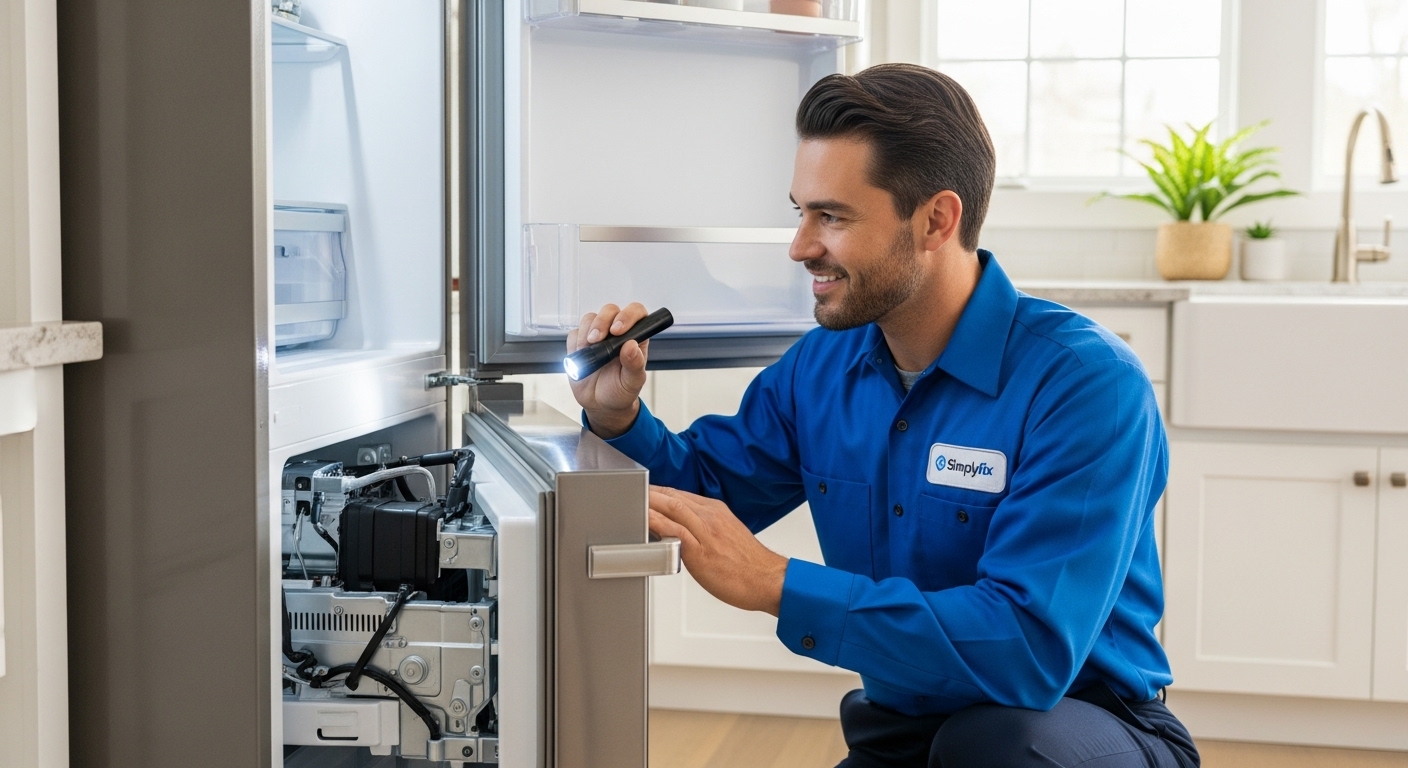
When warranty coverage fails and you’re facing expensive appliance repairs in Maple Ridge, Simplyfix provides honest diagnostic services and transparent repair estimates that help you make informed decisions about repair versus replacement. Our experienced technicians serve homeowners throughout Albion, Golden Ears, and Silver Valley with reliable appliance repair services that don’t depend on warranty company approval – just quality workmanship you can trust.
Recent Comments