
Wondering why your energy bills keep climbing despite using the same appliances? Old appliances could be silently draining your wallet, costing Maple Ridge homeowners hundreds of extra dollars each year in wasted energy consumption.
Picture this: you’re making your morning coffee in your cozy Silver Valley home when you notice your electricity bill has jumped another $50 this month. Your appliances seem to be working fine – the fridge is humming along, the dishwasher finished its cycle, and your dryer got those clothes nice and toasty. But here’s the thing that many homeowners don’t realize: appliances are basically energy vampires as they age, sucking more and more power to do the same job they used to do efficiently.
Living in Maple Ridge, we’re already dealing with BC’s rising electricity rates, and throwing inefficient appliances into the mix is like pouring money down the drain. The coastal humidity that makes our gardens so lush also makes our appliances work harder, while our busy lifestyles in neighborhoods like Thornhill and Hammond mean we’re using these energy-hungry machines more than ever.
Key Outtakes:
- Old refrigerators alone can consume 66% more energy than newer models, adding $200-400 annually to your electricity bill
- Appliances lose efficiency significantly after 7-10 years, with some increasing energy consumption by 20% or more
- Maple Ridge’s coastal climate accelerates appliance wear, making older units work even harder to maintain performance
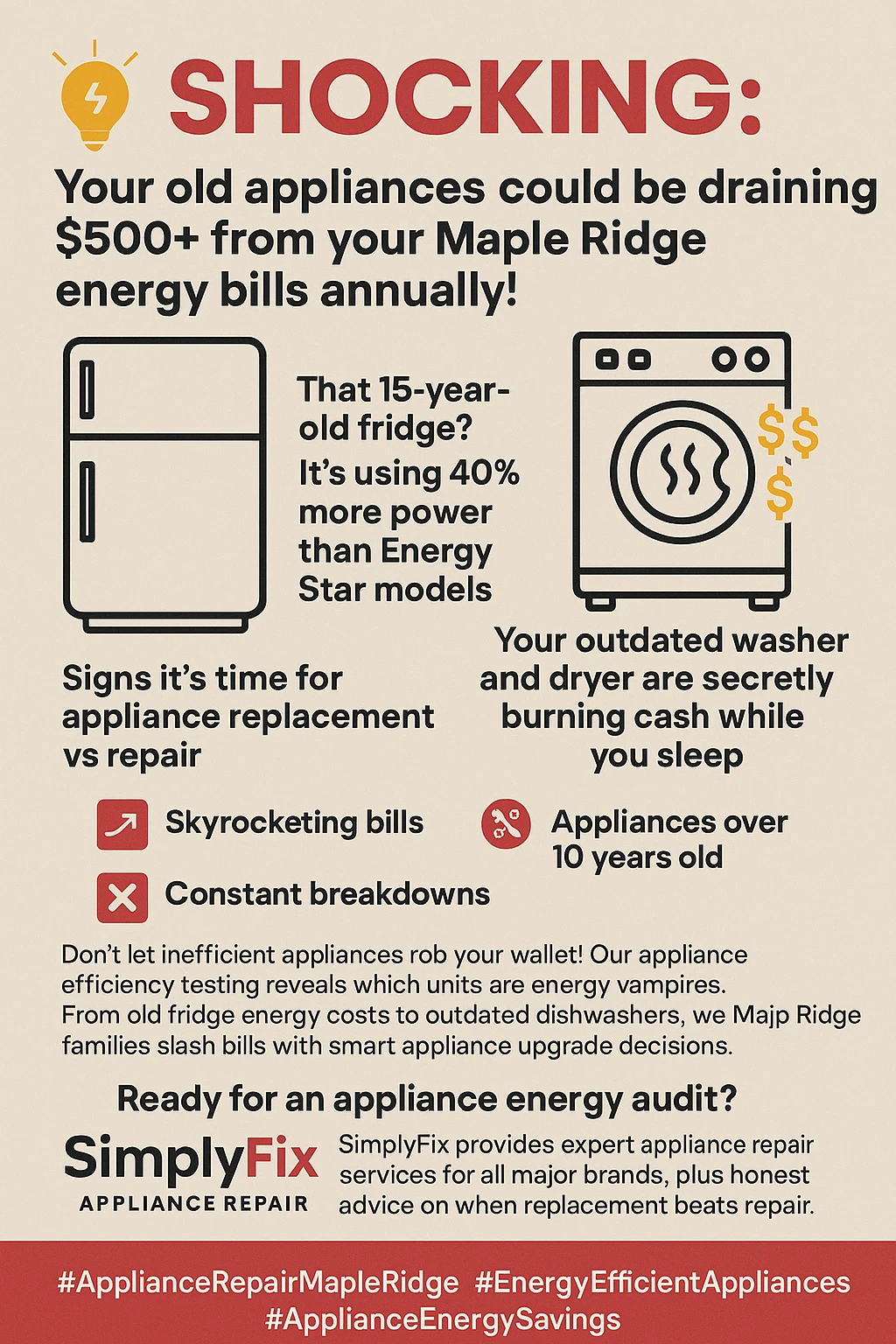
- Replacing aging appliances with energy-efficient models can cut your annual energy costs by $500+ while improving reliability
- The 50% rule helps determine when replacement makes financial sense over continued repairs and high energy costs
How Old Appliances Become Energy Vampires
When appliances age, they don’t just break down dramatically – they slowly lose their efficiency in ways that aren’t immediately obvious. Think of it like an athlete getting older; they can still perform, but it takes more effort to achieve the same results. Your 10-year-old refrigerator might still keep your milk cold, but it’s cycling on and off more frequently, running longer cycles, and working overtime to maintain the same temperature it used to achieve effortlessly.
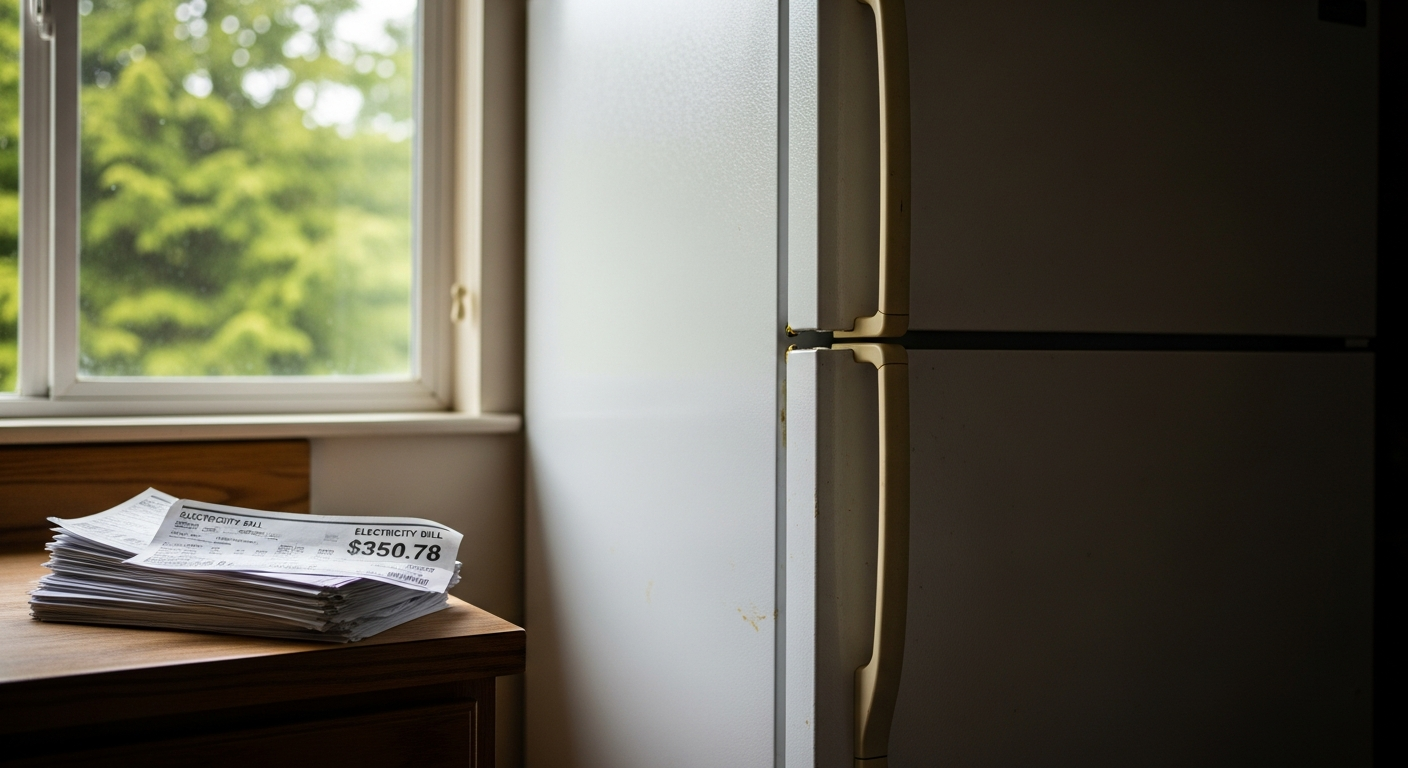
The biggest culprit in most Maple Ridge homes is the refrigerator, which runs 24/7 and represents about 20% of your total energy consumption. Older refrigerators consume significantly more energy than newer versions, with units over 10 years old using up to 66% more electricity than current models. This happens because key components like door seals deteriorate, allowing cold air to escape and forcing the compressor to work harder. Coils get dirty and corroded from our coastal air, reducing heat transfer efficiency and making the whole system struggle.
Washing machines and dryers face similar efficiency losses as they age. Older washing machines often use more hot water and longer cycles to achieve the same cleaning results, while aging dryers take multiple cycles to dry clothes properly due to worn heating elements or clogged ventilation systems. In our humid Maple Ridge climate, dryers already work harder than in drier regions, so any efficiency loss from aging components gets amplified significantly.
The Real Cost of Inefficient Appliances in Maple Ridge
Understanding the actual dollar impact of inefficient appliances helps put the problem in perspective and makes the case for upgrades much clearer. These aren’t just theoretical numbers – they represent real money coming out of your budget every month that could be spent on family activities or home improvements instead of wasted energy.
Appliance Efficiency Decline Timeline
Different appliances follow predictable patterns of efficiency decline, and understanding these timelines helps homeowners plan for replacements before energy costs spiral out of control. Rather than waiting for complete failure, smart homeowners monitor efficiency metrics and plan strategic replacements to maximize both performance and cost savings.
Refrigerators typically begin showing measurable efficiency loss around year 7-8, with dramatic increases after year 10. The energy consumption increases significantly after 10 years and continues climbing until replacement. Door seals start failing, compressors work harder, and frost buildup becomes more frequent. By year 12-15, most refrigerators are using 40-50% more energy than when new, making replacement a clear financial win even before considering reliability issues.
Long-Term Financial Impact
The financial benefits of energy-efficient appliances compound over time, making the investment increasingly attractive the longer you plan to stay in your current home. Unlike many home improvements that provide primarily aesthetic benefits, appliance upgrades deliver measurable returns through reduced operating costs while improving daily functionality.
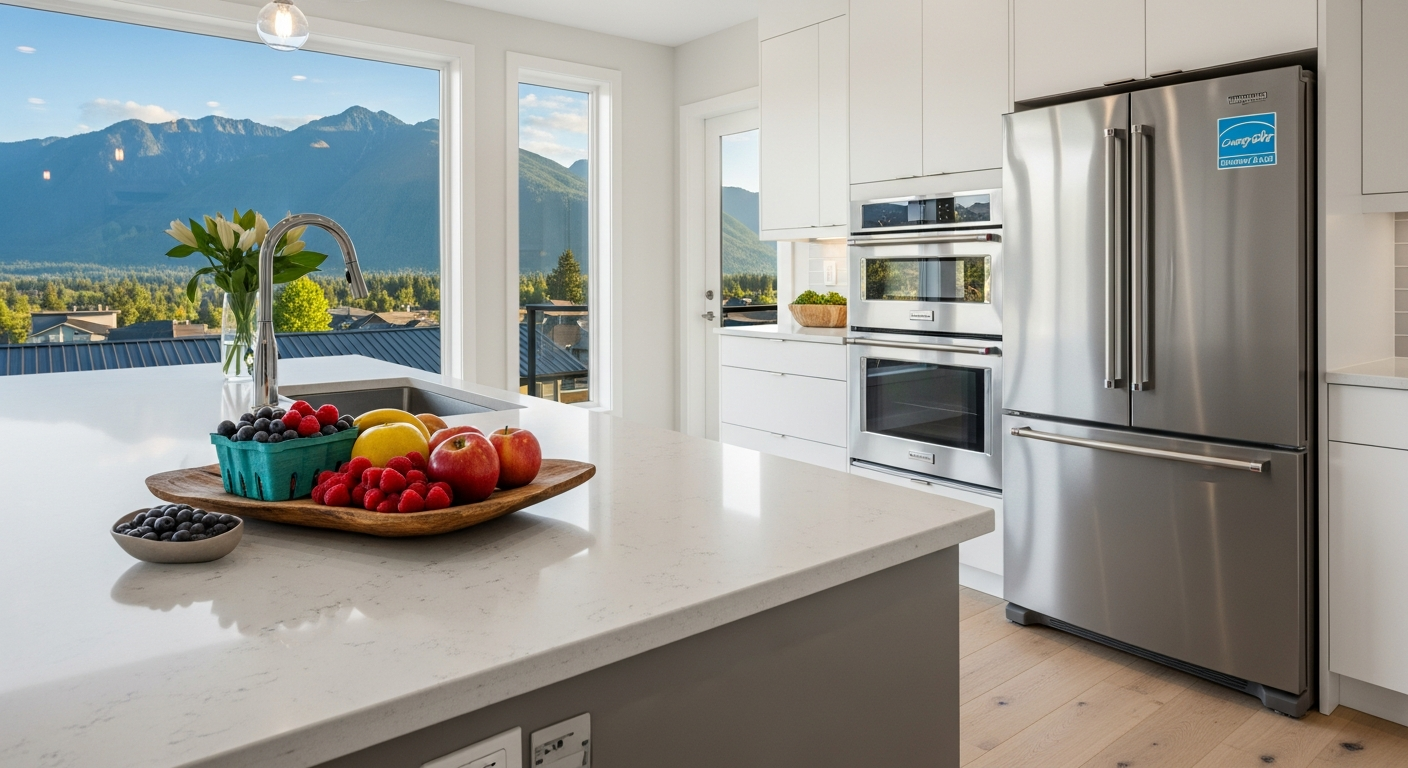
Over a typical 10-year appliance lifespan, energy savings often total $1,500-3,000 depending on which appliances are replaced and their previous efficiency levels. Combined with reduced repair costs, improved reliability, and often enhanced features, the total value proposition becomes compelling. Many homeowners find that energy savings alone recover 30-50% of the appliance replacement cost over the unit’s lifetime.
Frequently Asked Questions
How much can old appliances really add to my energy bill?
Old appliances can easily add $500-800 annually to your Maple Ridge energy bill through reduced efficiency and increased consumption. The biggest culprits are refrigerators over 10 years old, which can use 66% more energy than newer models, adding $200-400 yearly.
Wrapping Up
Old appliances represent a hidden but significant drain on Maple Ridge household budgets, with inefficient units easily adding $500+ annually through wasted energy consumption. The combination of natural efficiency decline, our challenging coastal climate, and BC’s rising electricity rates makes proactive appliance replacement a smart financial strategy rather than just an environmental choice.
Recent Comments