
You walked into the laundry room and found a puddle spreading across the floor, and now you’re staring at your washing machine wondering what went wrong.  This guide breaks down the most common reasons a washing machine leaks, what you can actually fix yourself, and when it’s smarter to call someone in. Washing machine leaks are one of those problems that tend to show up without warning. One load of laundry goes fine, the next one leaves you mopping up the floor. The frustrating part is that the water doesn’t always point you directly to the source. It pools, it travels, it hides. At Simplyfix, we get calls about washing machine leaking from homeowners across Maple Ridge pretty regularly, and what people often discover is that the fix is more straightforward than they feared. That said, some leaks do signal something more serious. Maple Ridge homes, particularly older builds in areas like Hammond and Haney, often have appliances that have been running for years. Rubber seals age out, hoses get brittle, and small problems that got ignored quietly turn into bigger ones. Knowing the difference between a quick adjustment and a repair that needs a professional is what this article is here to help you figure out.
Key takeaways
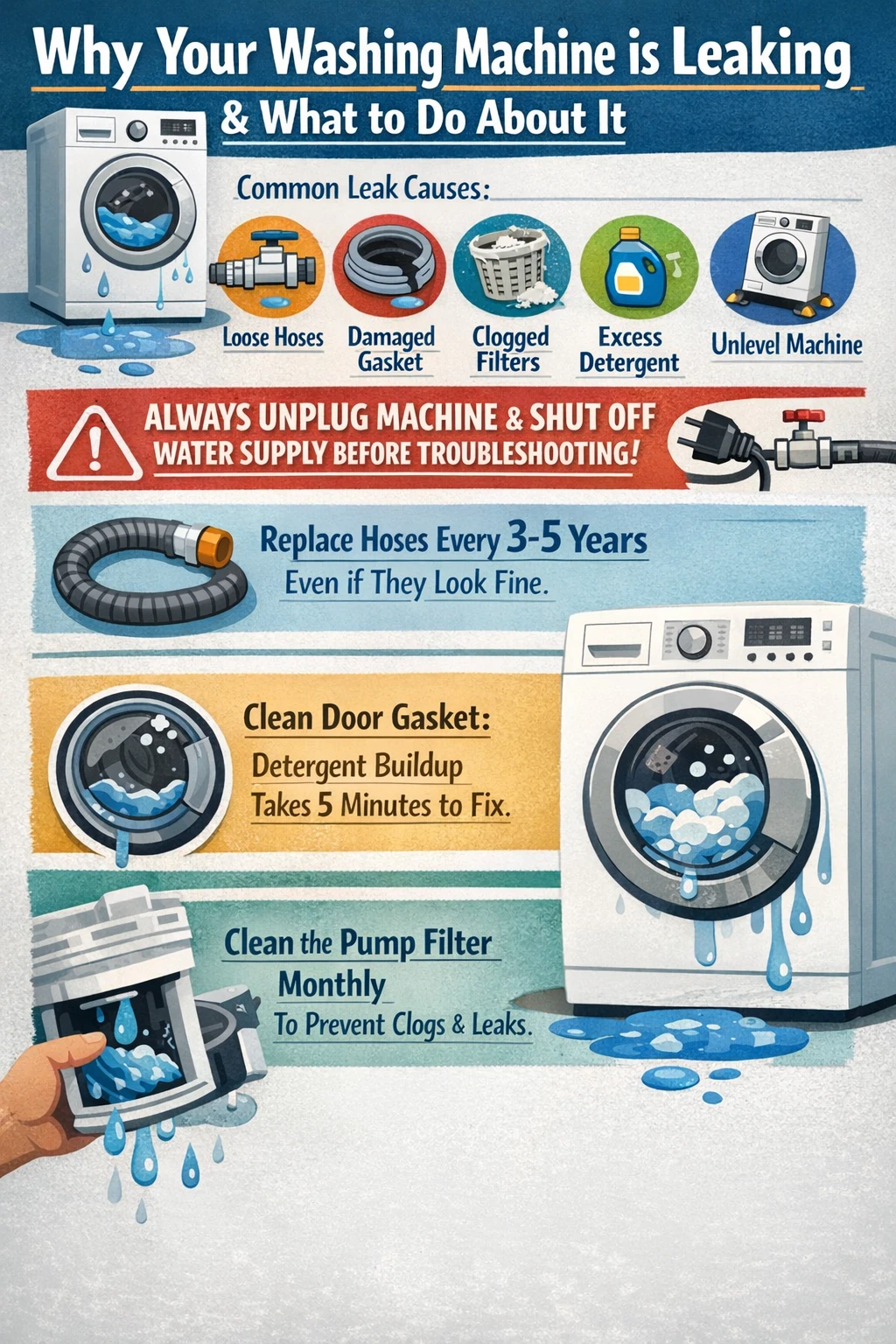
- Most washing machine leaks trace back to one of a handful of causes: loose or damaged hoses, a worn door gasket, a clogged drain pump filter, too much detergent, or an unlevel machine.
- Before troubleshooting anything, unplug the machine and shut off both the hot and cold water supply valves on the wall.
- Washing machine hoses should be replaced every three to five years, even if they look fine from the outside.
- The average cost to repair a washing machine leak runs around $180, and if your machine is under ten years old and the repair costs less than half what a new one would, fixing it is usually worth it.
- A front load washer leaking around the door is often caused by detergent buildup on the gasket, which is a five-minute cleaning job, not a repair call.
- If you cannot find where the water is coming from after a careful inspection, running a short cycle while watching the machine closely is the fastest way to locate the source.
Why is my washer leaking?
A washing machine leaks when water escapes somewhere it isn’t supposed to. That sounds obvious, but it matters because the location of the leak and when it happens during the cycle are your two biggest clues. Water appearing during the fill cycle points to different suspects than water showing up during the drain. A puddle right under the door of a front loader tells a different story than one sitting dead center under the machine. The most common culprits, in rough order of how often we see them, are damaged or loose hoses, a worn door gasket on front loaders, a clogged pump filter, detergent overuse causing overflow, an unlevel machine, and internal issues with the pump or tub seal. Most of the first group you can diagnose and sometimes fix yourself. The second group usually warrants a service call. One thing worth saying upfront: water travels. A leak at the back of the machine can easily make it look like the problem is at the front. Dry everything off, run a short cycle, and watch closely before you decide you’ve found the source.
Leaking from the bottom
A puddle forming directly under the machine is one of the more common scenarios, and it has a few likely explanations. Start with the drain hose and fill hoses at the back. Over time, rubber hoses crack, connections loosen, and small drips work their way down to the floor. Check both ends of each hose, including the rubber washers inside the fittings. If a washer is missing or compressed flat, water will seep past it steadily. If the hoses look fine, the next thing to consider is the drain pump. The pump moves water out of the tub when the cycle drains. If it develops a crack or a loose clamp, you’ll often see water dripping from the bottom of the machine specifically during the drain phase. Some handy homeowners can replace a drain pump themselves, but it does require pulling the machine apart, and if you’re not comfortable with that, it’s a reasonable job to hand off. There’s also the tub seal to think about. Your washer actually has two tubs sitting one inside the other. The outer tub holds the water; the inner perforated one spins. The seal between them, located where the transmission shaft enters the outer tub, wears down over time. When it goes, water leaks from the very bottom of the machine, often appearing slowly during the wash cycle. This is not a beginner repair. It takes significant disassembly, and in older machines sometimes the cost of parts and labor gets close enough to a replacement machine that it’s worth having that conversation.
Front load washer leaking at the door
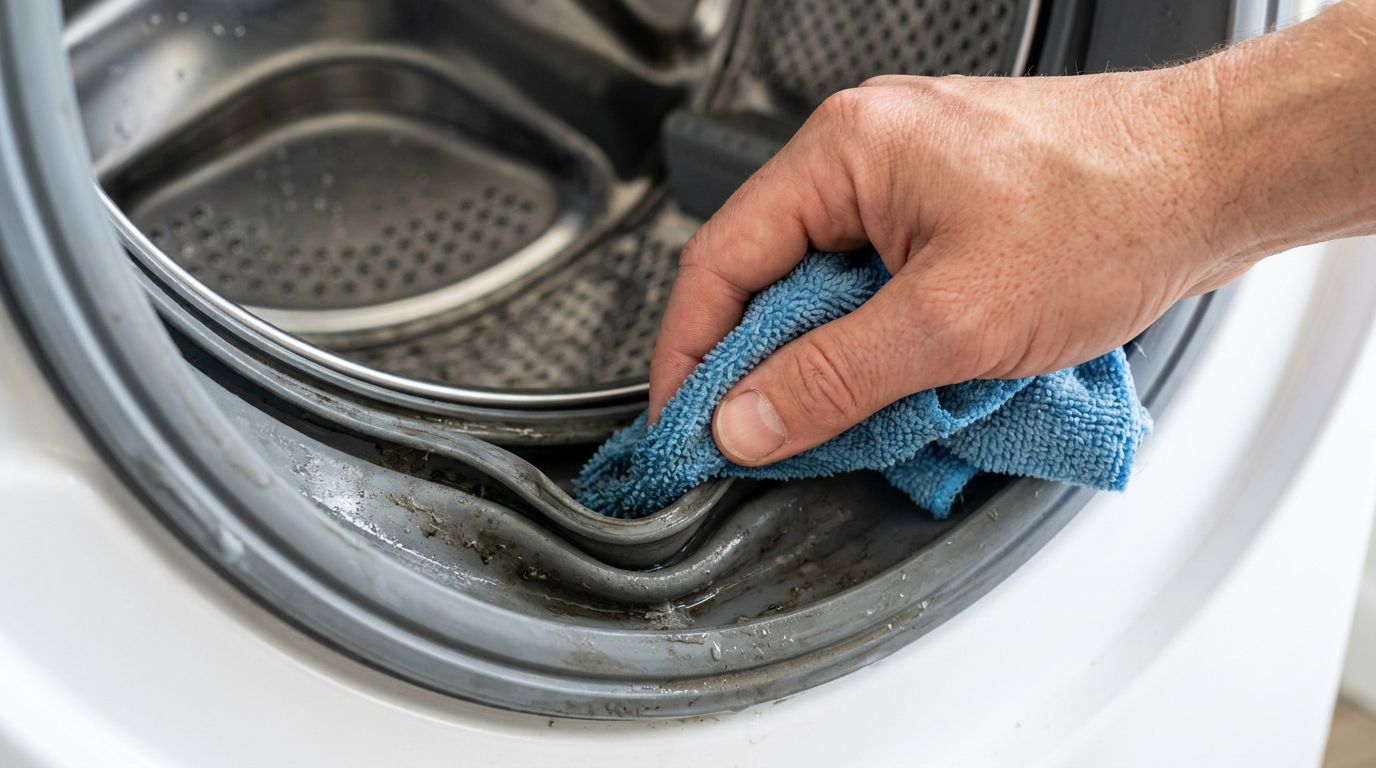 This is one of the most common calls we get, and the good news is that it’s often not serious. The large rubber gasket around the door opening, sometimes called the boot seal, is designed to keep water locked inside the drum while the machine runs. Dirt, detergent residue, and mold can build up in its folds and prevent it from seating properly against the door. A thorough wipe-down with a damp cloth, getting into all the creases, will solve this more often than you’d think. If cleaning doesn’t help, peel the gasket back gently and look for anything lodged underneath it. A small sock, a coin, a piece of fabric. Even a single strand of hair sitting under the seal can break the watertight connection. Samsung’s support documentation specifically flags this as a cause of front-load door leaks, and in our experience, they’re right. It doesn’t take much. If the gasket itself is torn, deformed, or has visible cracks, it needs to be replaced. That’s a more involved repair, typically best done by a technician, but it’s a known and common fix. Before you assume the worst, though, also check that the door is actually latching fully. A door that isn’t clicking shut properly, whether because of a loose hinge or a worn latch, will let water escape even if the gasket is in perfect shape. Tighten the hinges and test the latch before you order any parts.
Detergent and overflow problems
Nobody expects their soap to be the problem, but it comes up more than you’d think. Using too much detergent, or using regular detergent in a high-efficiency machine, creates excess suds. Those suds back up into the overflow system and eventually find their way out of the machine. You might see soapy water coming from the drawer, bubbles at the door seal, or a leak from the bottom that seems to have no obvious mechanical cause. There’s a simple test for this. Take a small item that was recently washed and drop it in a bowl of clean water. If the water goes soapy, you’re using too much detergent. Run a few empty cycles with no detergent at all until the suds stop appearing. Then switch to an HE-rated detergent and use less of it than the label suggests. If you have a water softener, you need even less, since soft water lathers more aggressively. The clogged overflow tube is a related issue. Suds can physically block the tube that manages excess water, causing a backup that leaks out. If you’ve been running your front loader with standard detergent for a while, there’s a good chance there’s residue built up inside the machine that needs to be cleared out. Running a cleaning cycle with a washing machine cleaner, or just hot water and white vinegar, is a reasonable first step. You can find Samsung’s troubleshooting guidance on detergent-related leaks useful if you own one of their machines.
The pump filter: the fix most people don’t know about
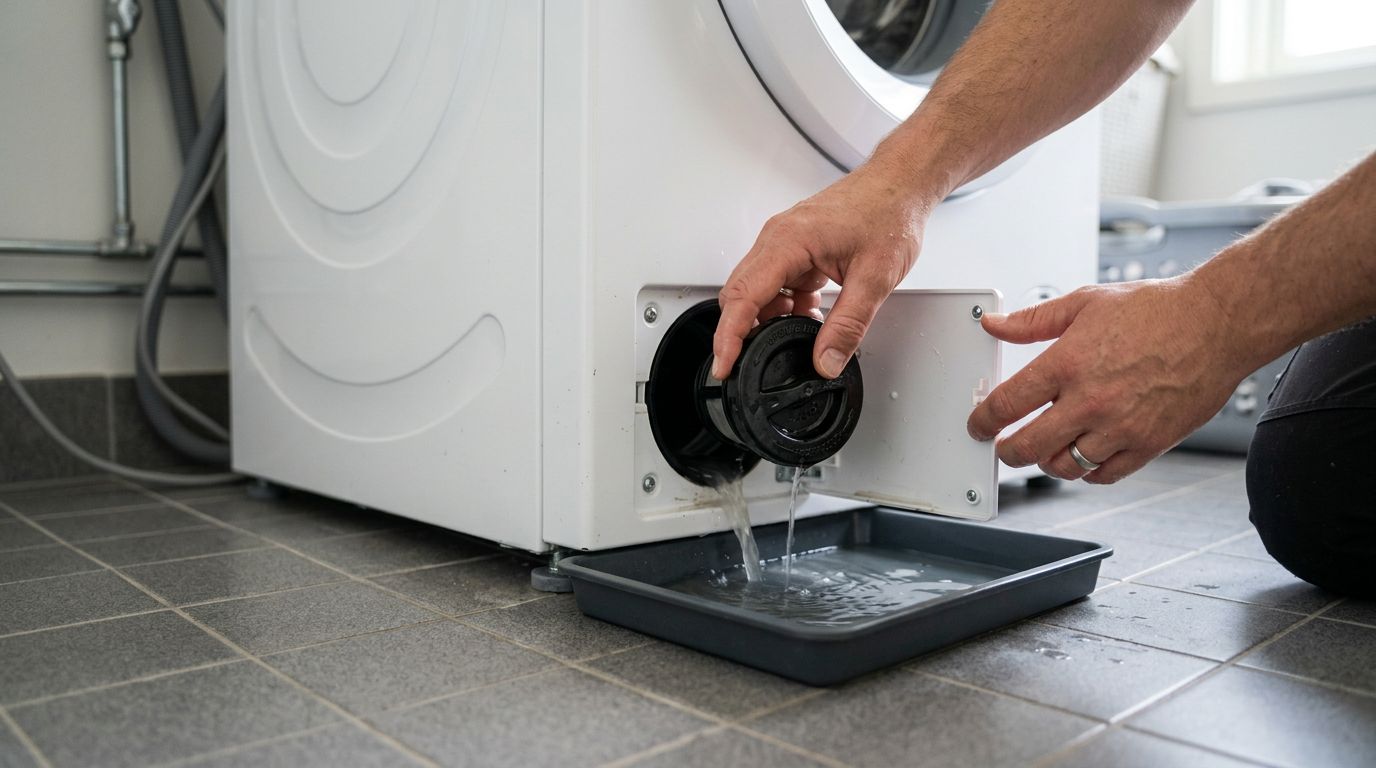 Front load washers have a small debris filter near the bottom of the machine, usually hidden behind a small access panel at the front. Its job is to catch lint, coins, hair ties, and whatever else makes it through the wash. The recommended cleaning interval is once a month or roughly every 40 washes. When this filter gets clogged, water can’t drain properly and starts to back up. That pressure can push water out through unexpected places, including areas that look like they’re nowhere near the filter itself. There are Reddit threads full of people who pulled apart half their washing machine trying to find a leak, only to discover a clogged filter was the whole problem. It’s genuinely one of the first things to check on any front loader with a mystery leak. Cleaning it takes about five minutes. Open the access panel, have a towel and a shallow container ready, pull the small rubber drain hose out and uncap it to drain the water, then unscrew the filter counterclockwise. Rinse it under a tap, clear any debris from the housing inside, and reinstall it. That’s it.
An unlevel machine and overpacking
Both of these causes get overlooked because they’re not mechanical failures. They’re just bad habits that quietly create problems. A washing machine that isn’t sitting flat on all four feet will vibrate and shift during the spin cycle. That movement can loosen connections, stress hoses, and in front loaders, pull the door away from the gasket just enough to let water escape. Check the machine with a carpenter’s level from front to back and side to side. Most washers have adjustable feet at the bottom; turn them clockwise to raise a corner, counterclockwise to lower it. Once you’ve got it level, check it every few months. Floors settle, especially in older homes. Overpacking is a similar situation. When the drum is stuffed too full, water can slosh over the top of the inner tub in a top loader, or force itself past seals in a front loader. The machine also goes off balance during spin, which compounds the problem. If you’re seeing leaks after big loads, especially bulky things like blankets or towels, try splitting those into smaller loads and see if the problem goes away. In our experience, this one shows up a lot in houses where one person does laundry very differently than the other. If you’re dealing with a top loader leaking from the bottom during a spin cycle, the tub cover gasket might be the issue. That gasket seals the outer tub and tub cover together, and if it fails, water sprays out during the spin. It’s a part worth looking into if nothing else has explained the leak. For Whirlpool owners, their error code guides can help narrow things down further.
When the problem is inside the wall, not the machine
This one catches people off guard. If you’ve checked every hose, the gasket, the filter, the level, and the detergent, and you’re still getting a puddle, consider the drain pipe in the wall. A partially blocked household drain can cause the washer’s drain water to back up and spill out at floor level, making it look exactly like a washing machine leak when the machine is actually fine. Try snaking the drain pipe if you have access to it, or run a short cycle while watching exactly where the water is coming out. If it’s emerging at the base of the wall standpipe rather than from the machine itself, the problem is the drain. We see this fairly often in older Maple Ridge properties, particularly in areas like Albion where some homes are pushing 30 or 40 years old and the plumbing has never been looked at. A plumber can snake the line, but if it’s a recurring issue, there may be a longer-term drainage problem worth having assessed.
Frequently asked questions
People dealing with a washing machine water damage situation for the first time tend to have a lot of the same questions. The answers below are based on what we see most commonly and what the reference guidance from major appliance manufacturers supports.
Can a clogged filter cause my washing machine to leak?
Yes, and it’s more common than most people expect. When the pump filter on a front loader gets blocked, water can’t drain through it properly and pressure builds up inside the machine. That backed-up water has to go somewhere, and it often ends up leaking out through the bottom or sides of the appliance. Cleaning the filter once a month prevents this entirely.
Is it worth repairing a leaking washing machine or should I replace it?
If the machine is under ten years old and the repair costs less than half the price of a comparable new machine, repairing is usually the better call. The average repair for a washing machine leak runs around $180, which is well under the cost of a new mid-range washer. That said, if your machine has had repeated issues, or if the repair involves replacing the outer tub or transmission, the math starts to shift toward replacement. Be honest about the machine’s track record.
Why is my washer leaking only when not in use?
Water dripping into or out of the machine when it’s off usually points to the inlet valve. This valve controls when water enters the tub, and when it fails, it can allow water to slowly seep in even with the machine unplugged from its cycle. The result is standing water inside the drum or slow drips pooling beneath the machine over time. Unplug the machine, pull it away from the wall, and inspect the valve at the back for visible cracks or corrosion. Replacing an inlet valve is a job a competent DIYer can handle, but if you’re not confident, a technician can do it quickly.
Why is there water under the drum but the hoses look fine?
A few things could cause this. A kinked drain hose prevents water from exiting cleanly, and the backup can make it look like a bottom leak. Overpacking the machine regularly can also trap water under the drum over time. If neither of those fits, the tub seal is worth investigating. When the seal between the inner and outer tub fails, water collects exactly where you’re describing. That repair requires significant disassembly and is best handled by someone who’s done it before.
How do I know if the leak is actually from my washing machine or something else?
Dry everything up completely, then run a full wash cycle while watching the area around the machine. If a new puddle forms, the washer is the source. If nothing appears during the cycle but water shows up later, check whether a nearby sink, floor drain, or condensation from another appliance could be contributing. In basement laundry rooms, sump pump discharge lines and floor drains are common false alarms. The timing and soapiness of the water are your best clues.
Wrapping up
Most washing machine leaks come down to something manageable: a loose hose, a dirty gasket, a clogged filter, or too much detergent. Start with the simple stuff before assuming the worst. Check the hoses at both ends, clean the door seal and pump filter if you have a front loader, make sure the machine is level, and look at how much detergent you’re actually using. If those checks don’t solve it, watching the machine run through a cycle will usually reveal exactly where the water is coming from. If you’ve worked through all of that and still can’t find the source, or the fix involves the tub seal, the drain pump, or the water level switch, that’s a good time to bring in help. At Simplyfix, we handle appliance repair across Maple Ridge and the surrounding area, including washing machine repair, and we’re straightforward about whether a repair makes financial sense for your situation. Give us a call and we’ll help you figure out the best path forward.
Recent Comments