

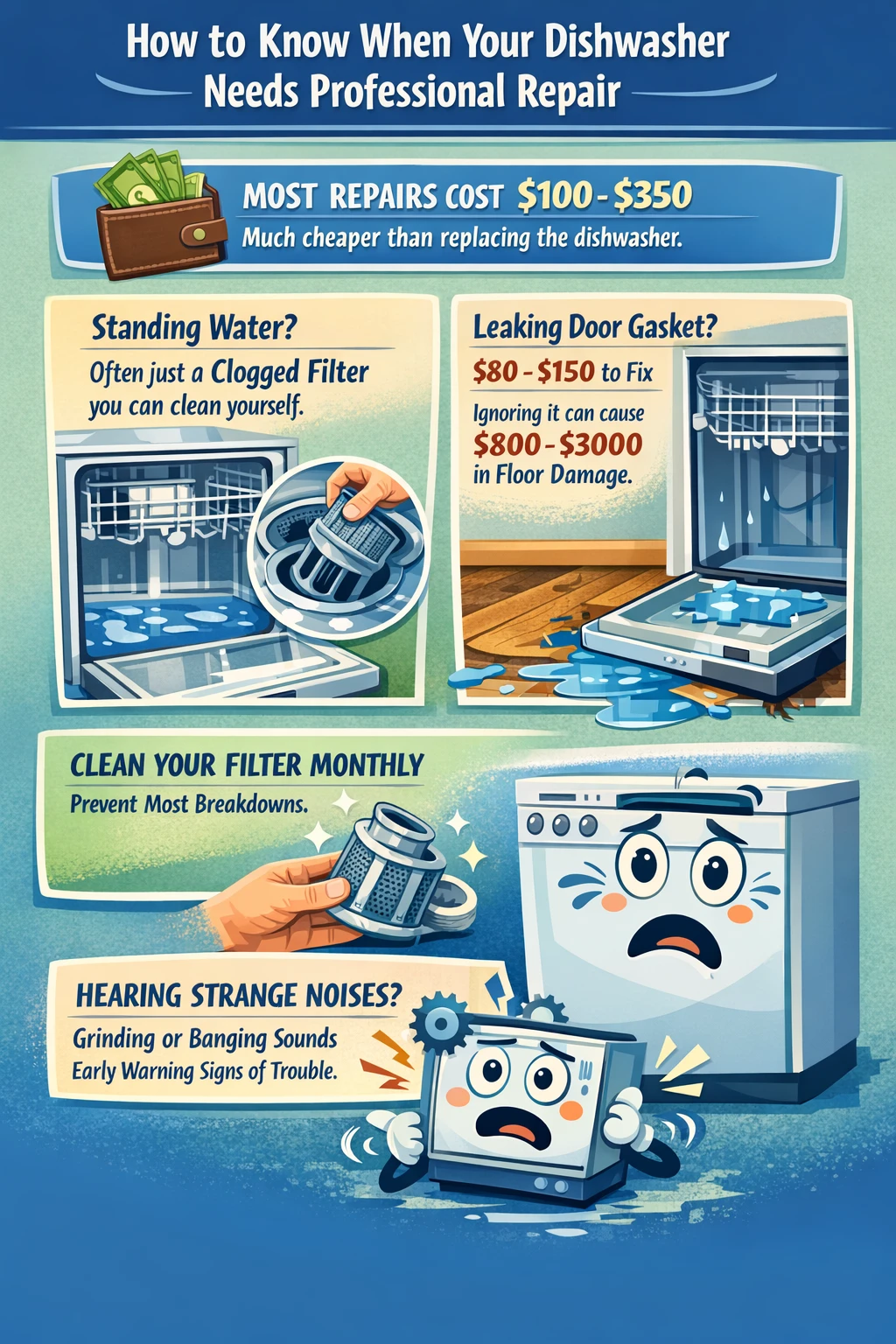
Your dishwasher has been sending you signals, and ignoring them usually means turning a $150 repair into a much bigger headache. [IMAGE PLACEHOLDER FOR IMAGE1] This guide walks you through the most common dishwasher repair signs so you can catch problems early, decide what you can fix yourself, and know when it’s time to call in a professional. Dishwashers are one of those appliances we don’t think about until they stop working. In Maple Ridge, where many homes were built in the 80s and 90s, we see a lot of mid-age machines that are right in that window where small problems start showing up. At Simplyfix, we get calls every week from homeowners who waited a little too long and turned a straightforward fix into a much more expensive repair. The good news is that dishwashers usually give you warning. They leak a little before they leak a lot. They get noisy before they quit. Knowing what to look for puts you in a much better position to act before things get out of hand.
Key takeaways
- Most dishwasher repairs fall between $100 and $350, which is almost always cheaper than replacing the unit.
- Standing water at the bottom of the tub after a cycle is one of the most common repair calls, and often starts with something as simple as a clogged drain filter.
- A leaking door gasket costs $80 to $150 to fix but can cause $800 to $3,000 in floor and subfloor damage if left unaddressed.
- If your dishwasher is under 8 years old and the repair is under $300, fixing it almost always makes more financial sense than replacing it.
- Grinding, banging, or constant humming sounds each point to different problems, and identifying which noise you’re hearing helps a technician diagnose faster.
- Cleaning the filter monthly is the single most effective thing you can do to prevent breakdowns, and most homeowners never do it.
How to tell when your dishwasher actually needs professional repair
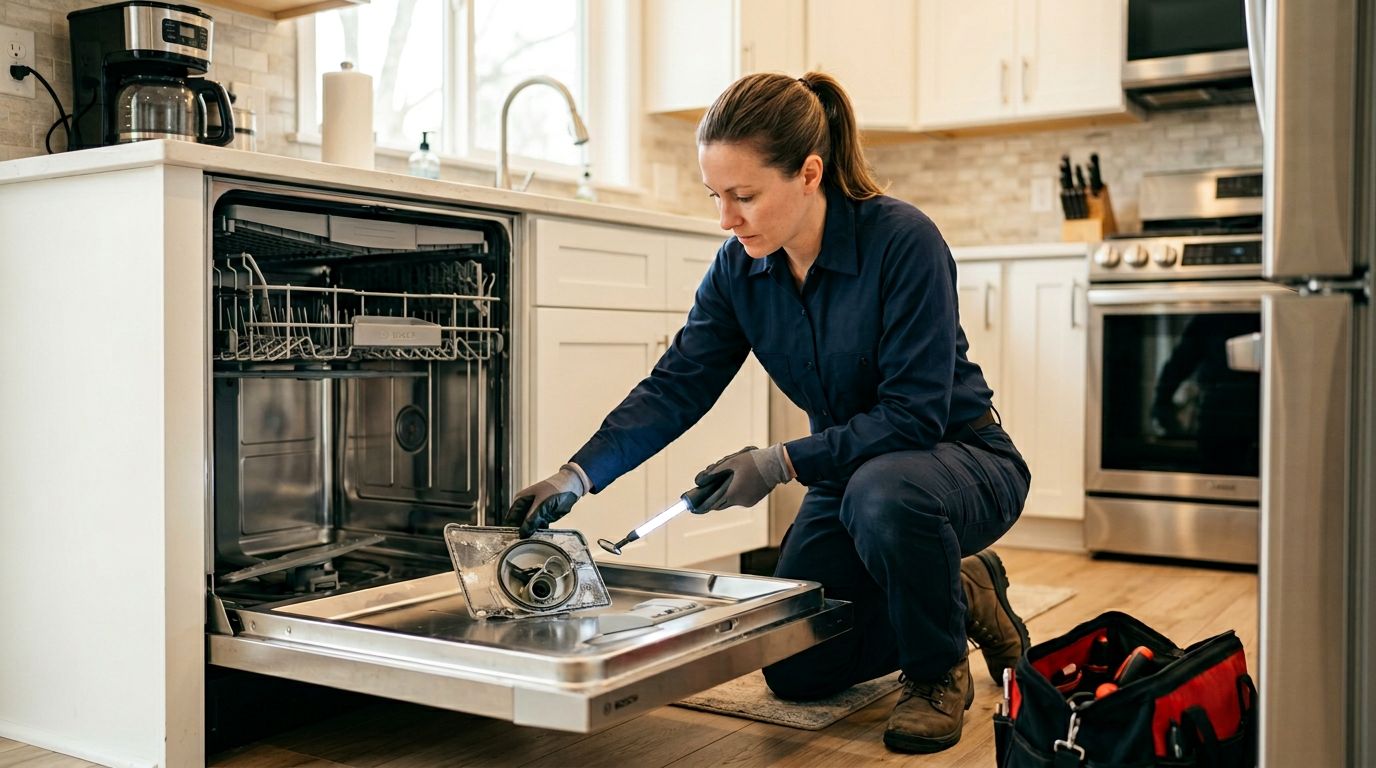 Some dishwasher problems are DIY territory. A clogged filter, cloudy glasses, or mild odor can often be sorted with a quick clean or a rinse aid refill. But when the machine is leaking, not draining, making strange noises, or refusing to start, those are dishwasher repair signs that point to a failing component, not a maintenance issue. The general rule: if you’ve cleaned the filter and the problem is still there, something mechanical or electrical is likely involved. That’s when a technician earns their fee. In our experience, the most common calls we get are for standing water, leaks around the door, and dishes coming out dirty after what looks like a normal cycle. These sound like different problems, but they’re often connected to the same few components: the drain pump, the door gasket, the water inlet valve, and the spray arms. Understanding what each failure looks like helps you describe the problem accurately when you call for service, which speeds things up considerably.
Dishes coming out dirty or gritty
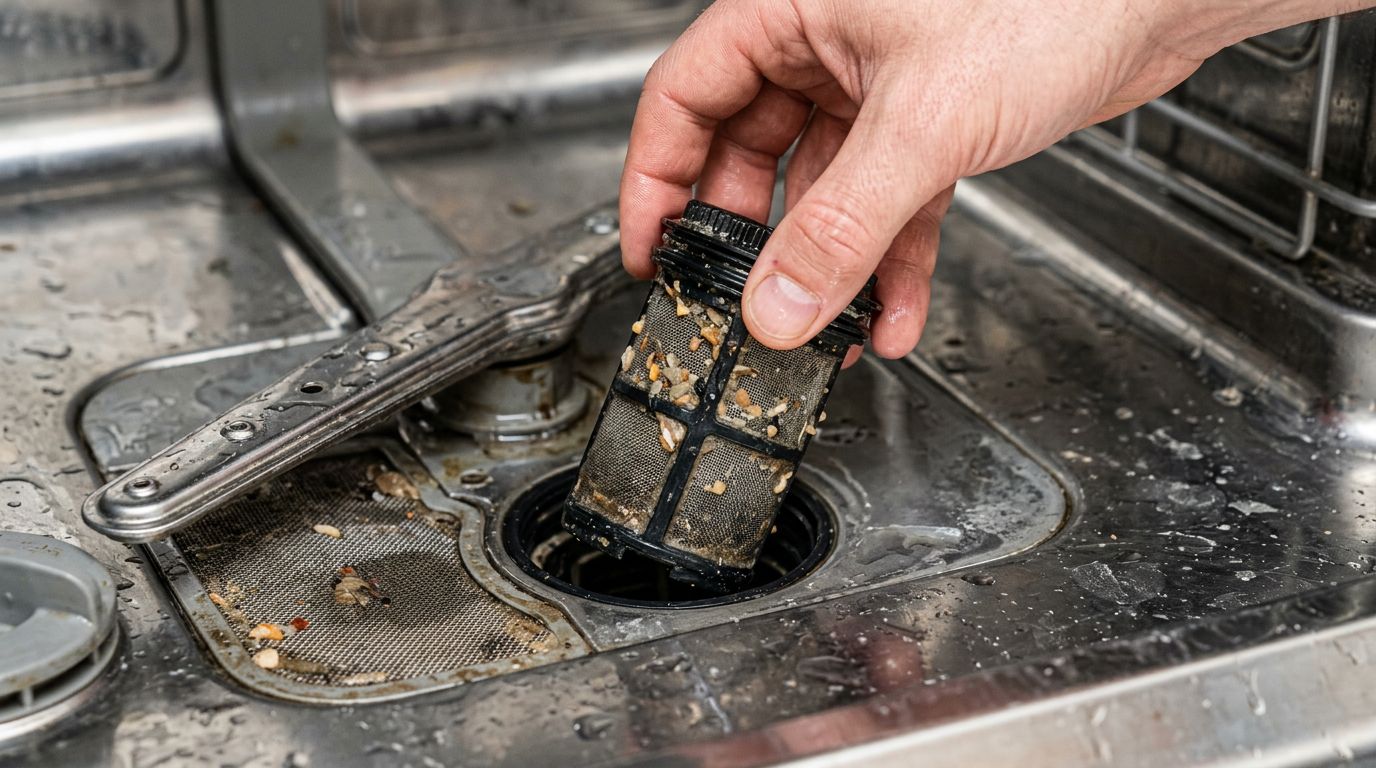 This is the most visible sign something is wrong, and it’s also the one most likely to be solved without a service call. Before assuming the worst, pull out the bottom rack and locate the filter at the base of the tub. On most modern dishwashers it twists out for cleaning. Give it a rinse under the tap. While you’re in there, check the spray arm holes for blocked debris. Food particles and mineral buildup clog both over time, and a five-minute cleaning fixes the problem more often than you’d expect. If you’ve cleaned both and dishes are still coming out grimy, the issue is deeper. The water inlet valve may not be allowing enough hot water into the tub, or the heating element isn’t reaching the temperature your detergent needs to activate properly. Running hot water at the kitchen sink for 30 seconds before starting a cycle is an old trick that helps, because it ensures the first fill is actually hot rather than sitting cold in the line. But if that doesn’t change anything, you’re likely looking at a component replacement. Water quality plays a role here too. In parts of Maple Ridge and surrounding communities, mineral deposits from harder water can build up inside spray arms and on the heating element over time. A monthly dishwasher cleaning tablet like Affresh helps break down that buildup before it becomes a repair issue.
Water on the floor: why this one can’t wait
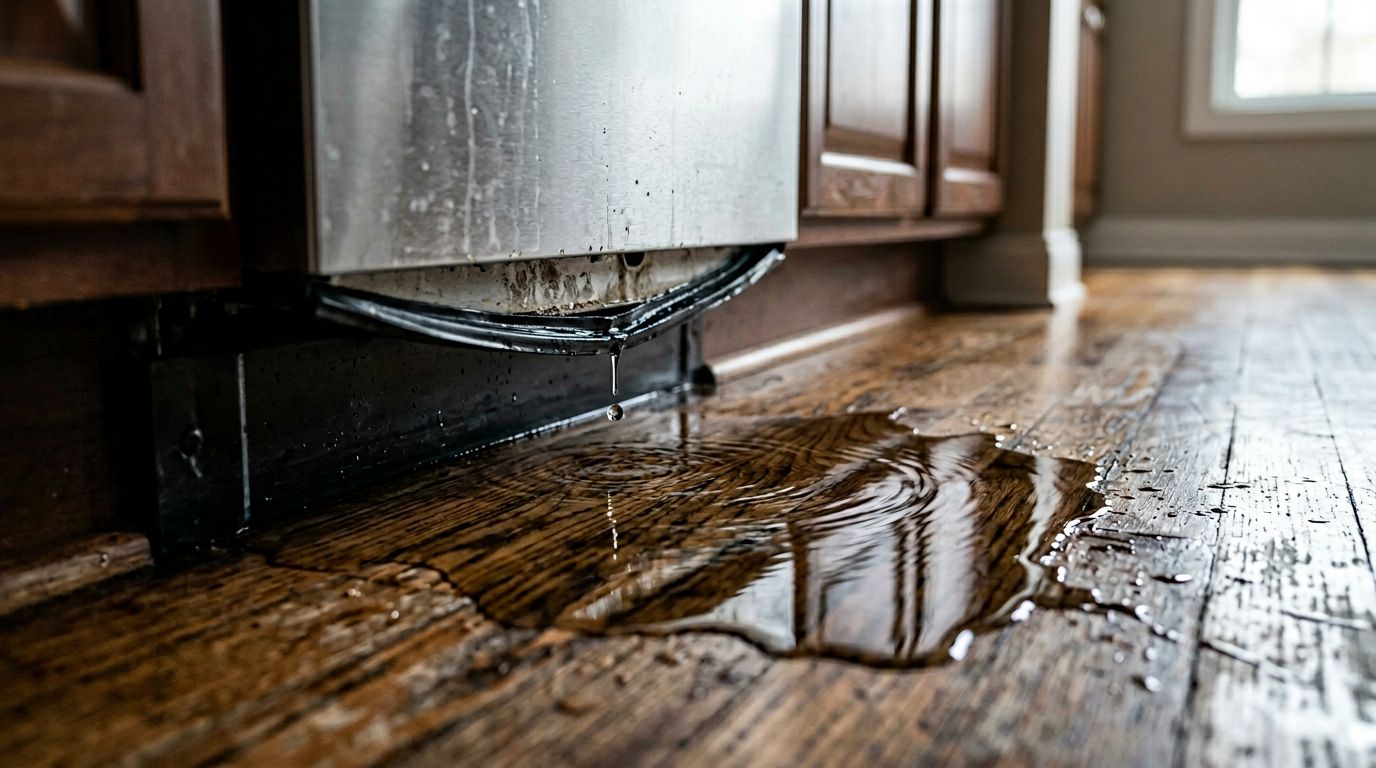 Nobody wants to come home to a puddle under the dishwasher. Beyond the obvious annoyance, a leak that’s even modest in size can seep under flooring, wick into the subfloor, and create conditions for mold growth within 24 to 48 hours. The cost difference between a $100 gasket replacement and repairing water-damaged flooring is not a small one. Flooring repairs can run $800 to $3,000 or more depending on how far the damage spread. Run your finger along the rubber door gasket all the way around the frame. You’re looking for cracks, tears, or sections that have gone flat and no longer form a real seal. A door gasket replacement is one of the most common dishwasher repairs there is, typically running $80 to $150, and it’s a straightforward job for a technician. If the gasket looks fine, the leak may be coming from somewhere else entirely. The pump housing, the water inlet valve, or a drain hose that’s cracked at a clamp are all possibilities. A leak that seems to come from underneath the unit rather than around the door points more toward one of those. That’s a job for a professional, not because it’s dangerous, but because finding the exact source takes diagnostic equipment and some disassembly.
Standing water and drainage problems
Open your dishwasher after a cycle and find water sitting at the bottom of the tub? Start with the filter. It’s the most common culprit, it’s free to clean, and it takes two minutes. If the filter is clear and water is still pooling, check that the drain hose behind the unit isn’t kinked or pinched. A hose that got pushed out of position during a kitchen renovation is a surprisingly common find in older homes around Thornhill and Webster’s Corners. If neither of those solves it, you’re likely looking at a failed drain pump. The drain pump is what pushes water out of the tub at the end of the cycle, and when it fails, water simply has nowhere to go. That’s a part replacement, and it typically runs $150 to $280 including labor. One thing worth knowing: if your dishwasher shares a drain connection with your garbage disposal, a clogged disposal can back water up into the dishwasher tub. Before assuming the dishwasher is at fault, make sure the disposal is clear and running properly.
Strange noises and what they’re telling you
Dishwashers make noise. That’s normal. What matters is what kind of noise and when it happens. A grinding sound during the wash cycle usually means something is caught in the chopper blade or pump area. Glass chips are the usual culprit, especially if anything broke in the machine recently. Run your hand carefully along the bottom of the tub and the drain area before assuming the worst. A loud banging during washing is often a cracked spray arm hitting the dish racks as it spins. Take out the racks and spin the spray arms by hand. If one wobbles, catches, or has a visible crack, that’s your answer. A spray arm replacement runs $50 to $100 and is one of the simpler fixes. Constant humming with no water entering the machine points to a different problem altogether. That usually means a stuck inlet valve solenoid, the part responsible for letting water into the tub. The machine is trying to fill, but the valve isn’t opening. That needs a technician.
Door latch problems and machines that won’t start
The dishwasher won’t run if the door latch doesn’t fully engage. It’s a safety interlock, not a quirk. If the door isn’t clicking shut properly or the machine starts and then stops, the latch assembly is worth looking at first. A broken latch assembly is one of the more straightforward dishwasher repairs. The part is inexpensive and replacement takes under an hour. If the latch appears to catch correctly but the machine still won’t start, the door latch switch may have failed instead. That’s the component that signals to the control board that the door is secured. A technician can test both during the same visit. Error codes on the display panel fall into a similar category. Modern dishwashers from brands like Bosch, Samsung, LG, and Whirlpool use error codes to flag specific failures. The user manual for your model will list what each code means, and Bosch’s support documentation is one example of a manufacturer resource that walks through common codes in plain language. If the code points to a control board failure on a machine that’s over 8 years old, that’s worth a conversation about repair versus replacement before you commit to the cost.
Repair or replace? A practical breakdown
This question comes up constantly. Here’s a simple way to think about it. If your machine is under 5 years old, repair it. It has plenty of life left and a replacement would cost $500 to $900 before installation. If it’s between 5 and 10 years old and the repair is under $250, repair almost always wins. If it’s over 10 years old, compare the repair cost to the efficiency gains of a newer unit, because older dishwashers use significantly more water and energy per cycle. The one exception to the math is a control board failure on an older machine. Control boards run $200 to $400, and a machine old enough to have a failing board is usually old enough to develop other problems shortly after. The ENERGY STAR program has a useful comparison tool if you’re weighing upgrade options for efficiency. We see this calculation play out regularly with older homes in areas like Cottonwood. Machines that are 12 to 15 years old often hit a point where one repair leads to another within six months. Honest advice at that stage is to set a repair budget threshold before you call, so you’re not making the decision under pressure.
Frequently asked questions
These are the questions we hear most often when homeowners are trying to figure out whether a trip to the appliance store is actually necessary, or whether a repair call makes more sense.
How much does dishwasher repair cost?
Most dishwasher repairs fall between $100 and $350. Common repairs and their typical ranges include door gasket replacement at $80 to $150, drain pump at $150 to $280, water inlet valve at $120 to $200, door latch assembly at $80 to $150, spray arm replacement at $50 to $100, and control board at $200 to $400. The control board sits at the top of that range and is only worth doing on a newer machine. Everything else on that list is usually a straightforward repair that gets your machine running for a fraction of what a new unit would cost.
Can I repair a dishwasher myself?
Some things, yes. Cleaning the filter, checking the drain hose for kinks, clearing debris from the spray arms, and replacing a door gasket are all within reach for a reasonably handy homeowner. Parts are widely available for most major brands. Anything involving the pump, the inlet valve, the wiring, or the control board is better left to a technician, not because it’s impossible but because misdiagnosis is expensive and water leaks inside a cabinet can cause a lot of damage quickly.
How do I know if my dishwasher is worth repairing?
Age and repair cost are the two factors that matter most. Under 5 years old: repair it. Between 5 and 10 years with a repair under $250: repair makes sense. Over 10 years old with a repair approaching the cost of a mid-range replacement: run the numbers. A useful reference point is the Natural Resources Canada guide on appliance efficiency, which can help you factor in operating costs when deciding whether an older machine is worth keeping.
What should I check before calling a repair technician?
Clean the filter first. It solves more problems than you’d think, and it’s the one thing most homeowners skip entirely. After that, check the door gasket for cracks, look at the spray arms for blockages, confirm the drain hose isn’t kinked, and note any error codes on the display. Write down what the machine is doing (or not doing) and when in the cycle the problem happens. That information helps a technician diagnose faster and often means a quicker, cheaper repair.
Wrapping up
Most dishwasher problems give you a window to act before they get expensive. A leaky door gasket caught early costs a fraction of what water-damaged flooring will run you. A clogged filter cleaned monthly can prevent half the service calls we see. And knowing whether your machine is worth repairing before you call saves everyone time. If you’re seeing any of these dishwasher repair signs and aren’t sure where to start, Simplyfix handles appliance repair across Maple Ridge and the surrounding area. Give us a call and we’ll help you figure out whether it’s a quick fix, a parts replacement, or time to start fresh.
Recent Comments